Trex Composite Fencing Cost Per Linear Foot USA
By the Garage Home Editorial Team — reviewed for accuracy. Last updated October 2026. This article is for informational purposes and reflects typical market pricing; obtain local quotes for your specific project.
Trex composite fencing brought the deck-board revolution to the fence line: wood-plastic composite panels that never rot, never need staining, and outlast three generations of cedar. The catch is upfront cost — in US markets, Trex Seclusions runs two to three times the installed price of pressure-treated pine.
This guide prices 2026 Trex fencing per linear foot: the Seclusions system that dominates the market, the Horizons horizontal option, and the honest lifecycle math that decides whether the premium pays back against wood.
Trex Composite Fencing Cost Per Linear Foot — At a Glance for US
Installed Trex composite fencing runs $25–$45 per linear foot for the standard 6 ft Seclusions system — panels, posts, rails and caps included. Supply-only runs $15–$22/LF. Wood-look horizontal Horizons runs higher. The premium over pine fencing ($12–$18/LF installed) pays back through zero-maintenance decades, not resale line items. This figure is a realistic planning number for the United States in 2026, not a marketing low-ball.
| Line Item | Typical Range (USD) | What Drives It |
|---|---|---|
| Trex Seclusions panel system (supply/LF) | $15–$22 | Interlocking pickets, rails included |
| Posts (composite sleeves over pressure-treated) | $45–$90 | Per post, 8 ft spacing |
| Post caps and trim | $8–$25 | Per post, decorative options |
| Installation labour (per LF) | $10–$18 | Post setting, panel assembly, gate framing |
| Gates (single pedestrian) | $400–$900 | Framed composite, self-closing hardware |
Understanding Trex Composite Fencing Cost Per Linear Foot
Trex fences are engineered systems: wood-plastic composite pickets lock into aluminum-reinforced rails, spanning between posts sleeved in the same material. The 25-year fade and stain warranty is the market’s strongest, and the material’s weather behavior (no rot, no warp, no paint cycle) is the entire value proposition — you are prepaying three decades of maintenance.
The US installed market for composite runs $25–$45/LF depending on region and crew quality, with Southeast and Texas metros at the competitive end and coastal premium markets above. The number to hold in mind: a 100-LF Trex fence runs $2,500–$4,500 installed versus $1,200–$1,800 in pine — a $1,500–$2,700 premium that never buys another gallon of stain.
What Moves the Price Up or Down
What moves the per-foot number:
| Factor | Cost Impact | Detail |
|---|---|---|
| Seclusions vs Horizons (horizontal) | +15–25% | Horizontal runs need more structural precision |
| Slope and terrain | +10–20% | Stepped/racked panels and deeper posts |
| Region and crew quality | ±20% | Metro composite-experienced crews quote tighter |
| Gates | 400–900 each | Framing and hardware dominate single items |
| Old fence demolition | 3 | 8 |
| Color tier (Woodland vs premium tones) | +5–10% | Premium colors priced up modestly |
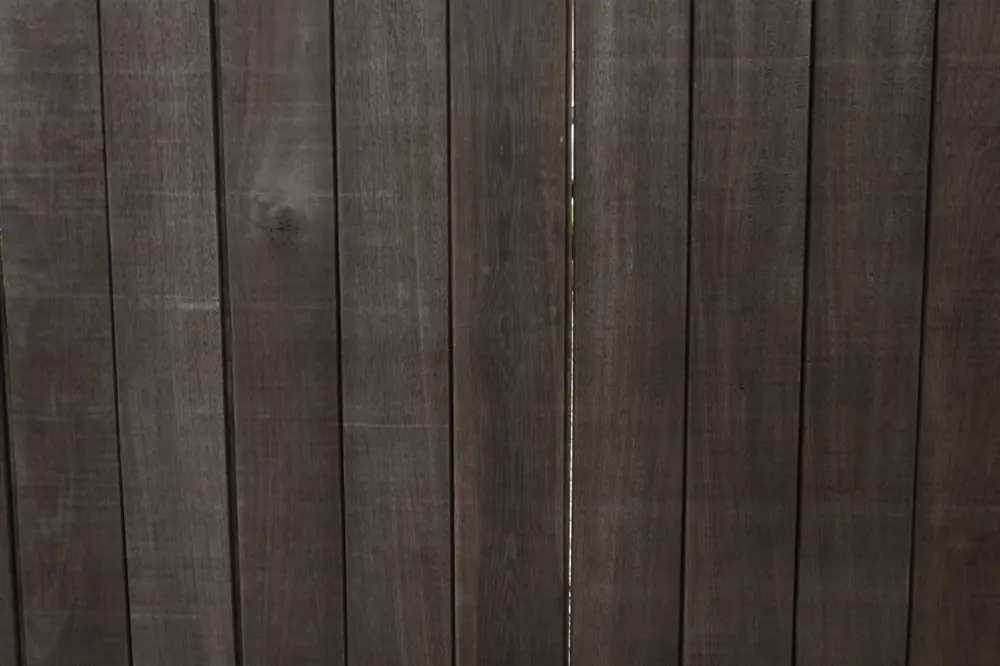
Trex Fence Systems
Two systems plus the wood comparison:
| Option | Description | Best For | Cost Level |
|---|---|---|---|
| Seclusions (vertical pickets) | Interlocking panels, classic fence look | The default composite system nationwide | Low-mid ($25–35/LF installed) |
| Horizons (horizontal boards) | Modern horizontal lines, framed panels | Contemporary architecture, privacy screens | High ($35–45/LF installed) |
| Comparison: pressure-treated pine | Traditional wood fence | Budget baseline that Trex premium is measured against | Baseline ($12–18/LF installed) |
Seclusions is the workhorse; Horizons buys a contemporary look at a real premium. The pine comparison is the honest decision framework: premium upfront, zero maintenance forever.
Three Realistic Project Scenarios
Budget — 80 LF backyard Seclusions — $25–$30
Straight run, flat lot, standard color.
- 80 LF installed at competitive metro rate — $2,000–$2,400
- One pedestrian gate — $450–$650
Why this matters: flat straight runs at competitive crews are the honest entry — the composite value equation works from day one.
Mid — 150 LF with slope — $30–$36
Quarter-acre backyard with contour changes.
- 150 LF racked panels installed — $4,500–$5,400
- Two gates, double-drive — $900–$1,400
Why this matters: slopes are where composite earns structure points — racked Trex holds lines cedar can’t without hand-cutting.
Premium — Horizons front screen — $38–$45
Modern front yard, horizontal composite screen.
- 60 LF Horizons installed — $2,300–$2,700
- Designer gates and lighting provision — $800–$1,200
Why this matters: horizontal composite screens photograph like architecture — that is the product being purchased at this tier.
The per-foot decision is system choice; the total decision is length and gates. Everything else is site noise.
Sample Budget Breakdown
The table below shows how a typical mid-range budget for trex composite fencing cost per linear foot distributes across trades, materials and compliance in the United States. Adjust the percentages to your own scope before using it as a savings target.
| Category | Estimated Amount | Explanation | Optimization Tip |
|---|---|---|---|
| Panel and post supply | $1,200–$3,300 | LF rate by system | Order 5–8% overage — composite offcuts don’t store value |
| Installation | $800–$2,700 | Crew labour | Use composite-experienced crews — wood-fence habits break composite warranties |
| Gates and hardware | $400–$1,400 | Per-item | Self-closing, adjustable hinges — cheap hinges fail first on every fence |
Every figure above is an indicative 2026 market range. Final quotes move with site conditions, contractor availability and the exact specification you lock in.
From Quote to Completion: the Typical Timeline
Most trex composite fencing cost per linear foot projects follow the same five-stage rhythm. Knowing the calendar before you sign prevents the two classic frustrations — feeling rushed into a deposit, and being surprised by a mid-project gap while materials arrive.
- Week 2–4: materials delivery — Standard palings and panels are stocked; Colorbond, composite and custom slats run 1–3 weeks from the distributor.
- Build: 2–5 days for a typical block — Posts concreted day one and left to cure, then panels, rails, gates and hardware — most residential fences finish inside a working week.
- Week 6–12: settlement checks — Posts that were slightly proud settle in the first months; a 90-day defect visit clause in the contract catches gate sag and loose fittings free of charge.
- Day 0–3: site walk and measure — The contractor walks the boundary, checks slope and access, locates services (dial-before-you-dig), and quotes per metre with gates and corners itemised.
- Week 1–2: approvals if needed — Front-boundary or pool fences go to council; boundary fences need the neighbour’s signed agreement under the relevant Fencing Act.
Smart Ways to Control the Budget
Cost control on trex composite fencing cost per linear foot is mostly about scope discipline and timing. These are the strategies that consistently deliver the largest savings:
Book in late autumn or winter
Fencing crews are quietest outside the spring renovation rush, and lead times drop from weeks to days.
Advantages:
- Directly reduces the controllable parts of the quote
- No impact on structural quality or compliance when scoped correctly
Disadvantages:
- Wet-ground conditions can slow drilling and add soil-stabilisation costs.
- Requires planning lead-time you may not have on urgent repairs
Keep the gate simple
A single standard pedestrian gate adds far less than double drive gates with automation; every hinge and automation component is a maintenance point.
Advantages:
- Directly reduces the controllable parts of the quote
- No impact on structural quality or compliance when scoped correctly
Disadvantages:
- Reduces convenience for wide access or parking inside the fence line.
- Requires planning lead-time you may not have on urgent repairs
Get quotes priced per metre, not per job
Linear-metre pricing makes quotes directly comparable and reveals who is padding the corner, gate and slope work.
Advantages:
- Directly reduces the controllable parts of the quote
- No impact on structural quality or compliance when scoped correctly
Disadvantages:
- Some contractors refuse to itemise, and per-metre rates rise sharply on sloped blocks.
- Requires planning lead-time you may not have on urgent repairs
Replace posts and rails at the same time
Old posts under new palings are the most common cause of early failure; renewing the frame while crews are mobilised adds little labour.
Advantages:
- Directly reduces the controllable parts of the quote
- No impact on structural quality or compliance when scoped correctly
Disadvantages:
- Adds 20–30% to a straightforward panel swap.
- Requires planning lead-time you may not have on urgent repairs
Permits, Rules and Safety
US fence permits follow the usual pattern with composite-specific notes:
- Fences on shared boundaries are usually cost-shared under state fencing Acts, but a formal notice procedure applies before work starts.
- Retaining walls over about 0.6–1.0 m (varies by council) require engineering and a permit — especially when a fence sits on top of the wall.
- Heritage overlays and conservation zones can dictate materials, colours and even the style of palings — always check before ordering materials.
Maintenance and Long-Term Ownership Costs
The purchase price is only the first line of the budget. These recurring items are what trex composite fencing cost per linear foot owners in the United States actually spend money on:
| Task | Frequency | Typical Cost | Why It Matters |
|---|---|---|---|
| Clear vegetation off the fence line | As needed | DIY (free) | Vines and shrubs trap moisture and push posts out of alignment. |
| Touch up galvanised or Colorbond scratches | As soon as spotted | DIY ($20 kit) | Edge rust spreads under the coating once it takes hold; touch-up paint stops it cold. |
| Wash and inspect palings/panels | Yearly | DIY (free) | Dirt holds moisture against the surface; a quick wash slows rot and corrosion dramatically. |
| Retighten fittings and check posts for movement | Twice a year | DIY (free) | Gates and corner posts work loose first; early tightening prevents rail sag. |
The composite maintenance schedule is nearly empty: soap-and-water annually, pressure-wash on low every few years, and check gate hardware yearly. No stain, no paint, no rot — that absence is the product.
Frequently Asked Questions
Is Trex fencing worth it over wood?
Financially: break-even at year 8–12 versus cedar’s maintenance costs, then decades of pure savings. Practically: it is the only fence that looks identical in year 15 as day one — which is the whole pitch.
How long does the 25-year warranty actually cover?
Fade and stain on the composite material, plus 25-year residential structural on panels and rails. Labor is covered 1–2 years by the installer — the warranty stack rewards buying from established local crews.
Can Trex fences handle slopes?
Yes — Seclusions racks along contours with stepped/raked panels. Steep sites add $3–$8/LF, and horizontal Horizons needs framed panels to hold lines on anything beyond gentle contour.
Does it fade?
It weathers slightly in the first months (the ‘weathering’ the warranty defines) and then stabilizes — the initial tone shift is by design, not a defect claim waiting to happen.
Summary
Planning trex composite fencing cost per linear foot in the United States starts with an honest range — $25–$45 for the scenarios most homeowners actually build — then works backwards through system choice, run length and slope handling.
At $25–$45/LF installed, Trex is the prepayment plan for three decades of zero maintenance — worth it on long boundaries and feature frontages, debatable on short utility runs. Collect at least three itemised quotes, confirm the permit path before signing, and hold a 10–15% contingency for site surprises. Those three habits protect more budget than any product choice.