Post and Rail Fence Cost Per Acre Kentucky
By the Garage Home Editorial Team — reviewed for accuracy. Last updated October 2026. This article is for informational purposes and reflects typical market pricing; obtain local quotes for your specific project.
Post and rail is Kentucky’s fence — the black-boarded paddocks of horse country, running mile after mile through the bluegrass. Priced by the acre, it’s the rare fence project where the math is genuinely geometric: perimeters scale with the square root of area, and the per-acre cost falls as farms grow.
This guide prices 2026 post and rail fencing per acre in Kentucky: perimeter math for common paddock sizes, the board tiers from oak to polymer-coated rail, and the horse-safety specifics that make this a specialist market rather than generic fencing.
Post and Rail Fence Cost Per Acre — At a Glance for US
Fencing an acre in Kentucky runs $6,000–$25,000 — roughly 836 LF of perimeter at $7–30/LF by tier. Five acres (~2,000 LF) run $15,000–$50,000; twenty acres run $30,000–$100,000+. Per-acre pricing falls with size because straight runs amortise corners and gates. Horse properties spec-specific: no protruding fasteners, breakaway considerations, and board materials that fail safely. This figure is a realistic planning number for the United States in 2026, not a marketing low-ball.
| Line Item | Typical Range (USD) | What Drives It |
|---|---|---|
| Perimeter for 1 acre (square, 836 LF) | $840–$840 | Linear feet — the geometric base |
| Oak board post-and-rail (per LF) | $9–$14 | 4-board, creosote or untreated posts |
| Poplar board, painted (per LF) | $7–$10 | The classic painted look |
| Polymer-coated wood (Centaur-class) | $15–$30 | Premium horse-safe systems |
| Corners, braces and gates | $150–$500 | Per assembly — structural premiums |
| Clearing and terrain (rolling KY land) | $0–$2 | Per LF on contour work |
Understanding Post and Rail Fence Cost Per Acre
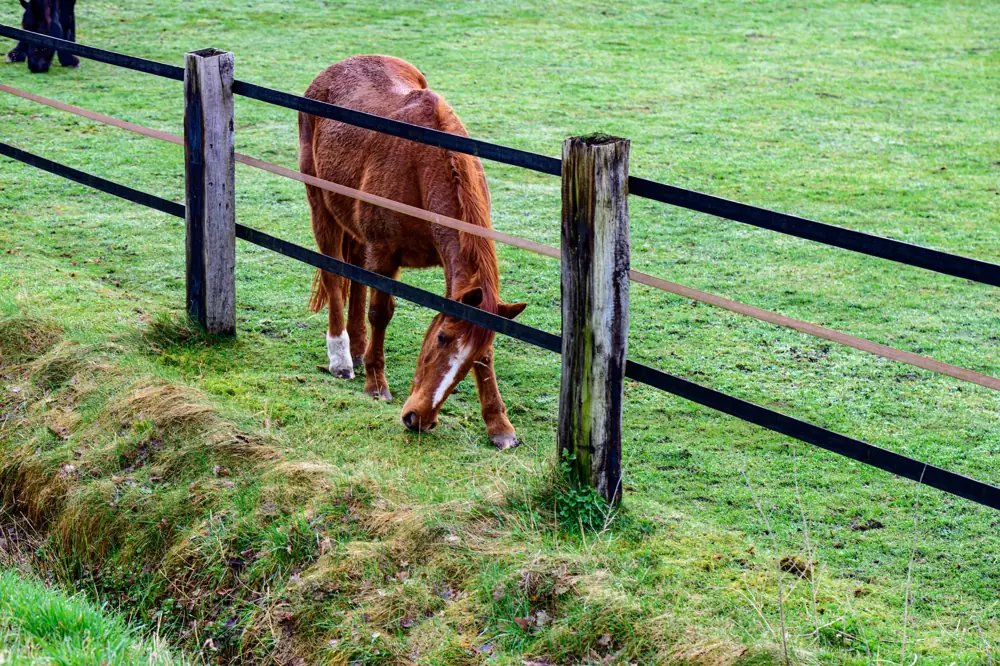
Post and rail is lines of wood: posts every 8–12 feet carrying 3–4 horizontal boards, braced at corners and gates where tension concentrates. The per-acre math follows geometry — a square acre’s perimeter is ~836 LF, five acres ~2,100 LF, twenty acres ~4,200 LF — with per-acre cost falling as straight runs stretch between fewer corners.
Kentucky horse country adds a real spec layer: boards must fail safely (break rather than splinter catastrophically), fasteners must not protrude into horse space, and fence height follows the discipline (4.5–5 ft for jumpers, 4 ft+ for most stock). The black-painted four-board fence is the regional icon — paint cycles are the maintenance reality that polymer-coated premium systems eliminate.
What Moves the Price Up or Down
What moves the per-acre number:
| Factor | Cost Impact | Detail |
|---|---|---|
| Board tier: poplar → oak → polymer-coated | +40–200% | Material life and horse-safety engineering |
| Paddock layout (corners per acre) | +10–20% | Every corner is a braced assembly |
| Rolling vs flat terrain | +5–15% | Contour work and post depths |
| Board count 3 → 4 rows | +25–33% | More board per post |
| Paint maintenance cycles (painted systems) | 0.5–1.5/LF/cycle | Every 3–5 years on classic systems |
| Gate count and quality | 300–900 each | Paddock access planning |
Post and Rail Systems
Three tiers own horse country:
| Option | Description | Best For | Cost Level |
|---|---|---|---|
| Poplar 3-board, painted | Classic look, paint cycles | Budget paddocks, dry-livestock use | Low ($7–10/LF) |
| Oak 4-board | Kentucky standard, painted | Horse properties, the regional icon | Mid ($9–14/LF) |
| Polymer-coated rail systems | Wood core, plastic shield, no paint | Premium horse-safety, maintenance-averse | High ($15–30/LF) |
The oak 4-board is what the region actually builds; polymer-coated is the modern upgrade money buys. Poplar answers budget dry-stock contexts honestly.
Three Realistic Project Scenarios
Budget — 2-acre dry paddock, poplar — $6,800–$9,500
3-board, painted, one gate.’, )
- ~1,700 LF poplar 3-board — $12,000–$14,000
Why this matters: small paddocks pay corner premiums — per-acre pricing peaks at the small end.
Mid — 5-acre horse property, oak 4-board — $22,000–$32,000
Four paddocks, four gates.
- ~2,100 LF oak 4-board — $19,000–$29,000
- Gates and bracing — $3,000–$4,000
Why this matters: the classic Kentucky build — per-acre economics arrive at five acres and the region’s icon fencing.
Premium — 10-acre with polymer-coated — $55,000–$85,000
Full property boundary, no paint ever.’, )
- ~4,200 LF polymer system — $50,000–$78,000
- Gates and layout — $5,000–$7,000
Why this matters: polymer-coated at scale is the maintenance-forever-solved play — the premium pays itself back in skipped paint decades.
The geometric truth holds across tiers: per-acre pricing falls as the property grows because straight runs dominate. Size the property, then the tier.
Sample Budget Breakdown
The table below shows how a typical mid-range budget for post and rail fence cost per acre distributes across trades, materials and compliance in the United States. Adjust the percentages to your own scope before using it as a savings target.
| Category | Estimated Amount | Explanation | Optimization Tip |
|---|---|---|---|
| Perimeter and layout design | $0–$500 | Paddock planning | Plan corners and gates before quoting — layout is the hidden cost lever |
| Fence construction | $6,800–$85,000 | LF × tier | Quote corners and braces as line items — assembly creep is the classic overrun |
| Gates and hardware | $300–$900 | Per gate | Horse-safe latches and braces — cheap hardware fails into injury territory |
Every figure above is an indicative 2026 market range. Final quotes move with site conditions, contractor availability and the exact specification you lock in.
From Quote to Completion: the Typical Timeline
Most post and rail fence cost per acre projects follow the same five-stage rhythm. Knowing the calendar before you sign prevents the two classic frustrations — feeling rushed into a deposit, and being surprised by a mid-project gap while materials arrive.
- Week 6–12: settlement checks — Posts that were slightly proud settle in the first months; a 90-day defect visit clause in the contract catches gate sag and loose fittings free of charge.
- Day 0–3: site walk and measure — The contractor walks the boundary, checks slope and access, locates services (dial-before-you-dig), and quotes per metre with gates and corners itemised.
- Week 1–2: approvals if needed — Front-boundary or pool fences go to council; boundary fences need the neighbour’s signed agreement under the relevant Fencing Act.
- Week 2–4: materials delivery — Standard palings and panels are stocked; Colorbond, composite and custom slats run 1–3 weeks from the distributor.
- Build: 2–5 days for a typical block — Posts concreted day one and left to cure, then panels, rails, gates and hardware — most residential fences finish inside a working week.
Smart Ways to Control the Budget
Cost control on post and rail fence cost per acre is mostly about scope discipline and timing. These are the strategies that consistently deliver the largest savings:
Book in late autumn or winter
Fencing crews are quietest outside the spring renovation rush, and lead times drop from weeks to days.
Advantages:
- Directly reduces the controllable parts of the quote
- No impact on structural quality or compliance when scoped correctly
Disadvantages:
- Wet-ground conditions can slow drilling and add soil-stabilisation costs.
- Requires planning lead-time you may not have on urgent repairs
Keep the gate simple
A single standard pedestrian gate adds far less than double drive gates with automation; every hinge and automation component is a maintenance point.
Advantages:
- Directly reduces the controllable parts of the quote
- No impact on structural quality or compliance when scoped correctly
Disadvantages:
- Reduces convenience for wide access or parking inside the fence line.
- Requires planning lead-time you may not have on urgent repairs
Get quotes priced per metre, not per job
Linear-metre pricing makes quotes directly comparable and reveals who is padding the corner, gate and slope work.
Advantages:
- Directly reduces the controllable parts of the quote
- No impact on structural quality or compliance when scoped correctly
Disadvantages:
- Some contractors refuse to itemise, and per-metre rates rise sharply on sloped blocks.
- Requires planning lead-time you may not have on urgent repairs
Replace posts and rails at the same time
Old posts under new palings are the most common cause of early failure; renewing the frame while crews are mobilised adds little labour.
Advantages:
- Directly reduces the controllable parts of the quote
- No impact on structural quality or compliance when scoped correctly
Disadvantages:
- Adds 20–30% to a straightforward panel swap.
- Requires planning lead-time you may not have on urgent repairs
Permits, Rules and Safety
Agricultural fencing rules are lighter than urban, with three notes:
- Heritage overlays and conservation zones can dictate materials, colours and even the style of palings — always check before ordering materials.
- Front-boundary fences commonly need council approval and height limits differ between states — 1.2 m at the front is a frequent maximum, with 1.8–2.1 m accepted for side and rear boundaries.
- Pool safety fences are separately regulated: in Australia the barrier must be certified by a licensed inspector, and in most US states the barrier code references the national pool safety standard.
Maintenance and Long-Term Ownership Costs
The purchase price is only the first line of the budget. These recurring items are what post and rail fence cost per acre owners in the United States actually spend money on:
| Task | Frequency | Typical Cost | Why It Matters |
|---|---|---|---|
| Wash and inspect palings/panels | Yearly | DIY (free) | Dirt holds moisture against the surface; a quick wash slows rot and corrosion dramatically. |
| Retighten fittings and check posts for movement | Twice a year | DIY (free) | Gates and corner posts work loose first; early tightening prevents rail sag. |
| Re-oil or reseal timber | Every 2–3 years | DIY $3–$8 per m² | UV breaks down timber coatings; scheduled re-coating roughly doubles paling life. |
| Clear vegetation off the fence line | As needed | DIY (free) | Vines and shrubs trap moisture and push posts out of alignment. |
Painted systems: repaint every 3–5 years (the Kentucky black-gloss cycle), walk the line after storms for loose boards, and re-nail protruding fasteners immediately — horse safety is maintenance. Polymer systems: check tension and rail integrity, nothing else.
Frequently Asked Questions
Why price post and rail per acre instead of per foot?
Because buyers think in acres — but the real math is perimeter linear feet. A square 1-acre paddock is ~836 LF; the same acre as a long strip can double that. Quote LF, compare acres.
How long does a Kentucky board fence last?
Painted oak: 15–25 years with paint discipline; posts fail before boards. Polymer-coated: 25–30+ with zero paint. The paint cycle is the difference — budget it or eliminate it.
Are breaks safe for horses?
That’s the spec’s core: proper horse fencing fails by breaking clean or flexing, not splintering. Oak boards break flat; polymer rails flex and return. Protruding fasteners are the injury mechanism that maintenance walks exist to prevent.
Can I fence only part of the property first?
Yes and it’s the budget-real strategy: perimeter-plus-one-paddock first, then subdivide. Layout design now saves re-work later — plan the whole property, build in phases.
Summary
Planning post and rail fence cost per acre in the United States starts with an honest range — $6,000–$25,000 for the scenarios most homeowners actually build — then works backwards through perimeter geometry and board tier.
Convert acres to linear feet first (it’s the number that prices the job), choose oak 4-board for the regional standard or polymer for zero-maintenance forever, and plan paddocks before any post goes in. Collect at least three itemised quotes, confirm the permit path before signing, and hold a 10–15% contingency for site surprises. Those three habits protect more budget than any product choice.
Related Fencing Guides
- Retaining Wall with Fence Above Cost Per Meter Adelaide
- Horizontal Slat Fence Cost Per Meter Wellington NZ
- Chain Link Fence Removal and Replacement Cost Chicago
- Wrought Iron vs Aluminium Fence Cost Georgia
- Double Swing Gate with Opener Cost Auckland NZ
- Automatic Sliding Gate Installation Cost California