Fiberglass vs Vinyl Liner Pool Cost 20 Year Arizona
By the Garage Home Editorial Team — reviewed for accuracy. Last updated October 2026. This article is for informational purposes and reflects typical market pricing; obtain local quotes for your specific project.
Fiberglass and vinyl liner are the two pool builds under $70k — the budget-tier fork that Arizona families actually cross-shop. One is a factory shell that never re-finishes; the other is a site-built basin whose liner is a scheduled replacement. The 2026 comparison is honest at last because both are mature products with known failure clocks.
This guide prices the Arizona head-to-head: turnkey fiberglass versus vinyl-liner construction at three size tiers, the 7–12-year liner replacement that defines vinyl’s real cost, and the desert-chemistry behavior that separates the surfaces.
Fiberglass vs Vinyl Liner Pool — At a Glance for US
A vinyl liner pool in Arizona runs $40,000–$85,000 turnkey at entry sizes — cheaper than fiberglass at the quote stage — but the ledger changes at liner-replacement time: $4,000–7,000 every 7–12 years versus fiberglass’s never. Fiberglass turnkey at comparable sizes runs $50,000–75,000. Ten-year cost of ownership: close. Twenty-year: fiberglass wins by a full liner cycle or two. This figure is a realistic planning number for the United States in 2026, not a marketing low-ball.
| Line Item | Typical Range (USD) | What Drives It |
|---|---|---|
| Vinyl liner pool, turnkey (small/medium) | $40,000–$55,000 | Panels, liner, equipment, basic deck |
| Vinyl liner pool, larger custom | $55,000–$70,000 | Size and shape freedom |
| Liner replacement (every 7–12 years) | $4,000–$7,000 | The scheduled ownership cost |
| Fiberglass turnkey (small/medium) | $50,000–$65,000 | Factory shell, days install |
| Fiberglass turnkey (larger molds) | $65,000–$85,000 | The catalog ceiling |
| Salt systems (either build) | $1,500–$2,500 | Desert-popular |
Understanding Fiberglass vs Vinyl Liner Pool
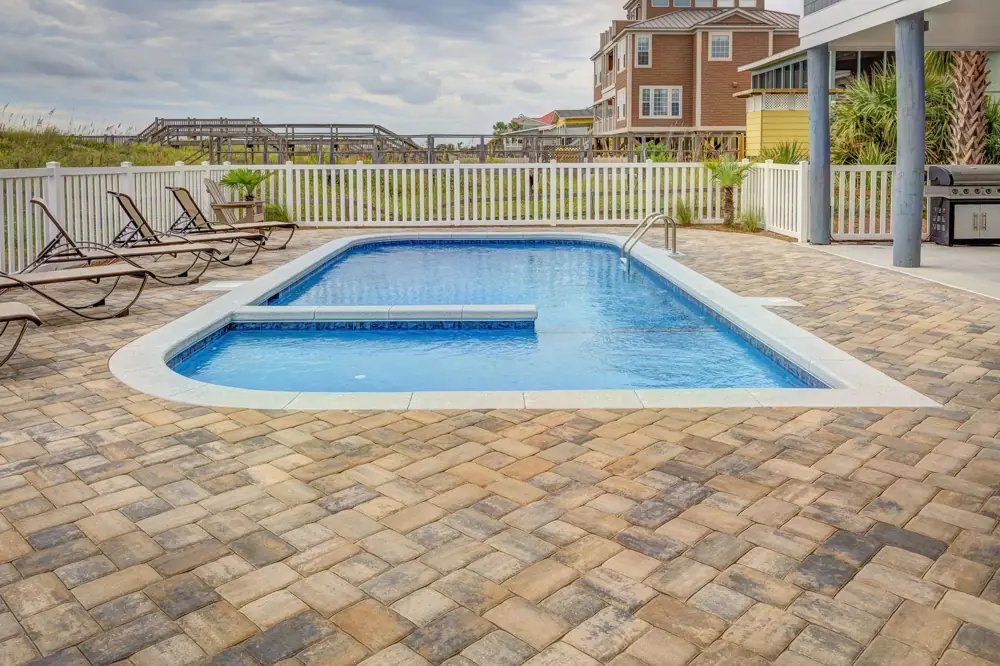
Vinyl liner pools are site-assembled: steel or polymer panel walls bolted into an excavation, a custom-fit vinyl liner as the waterproof surface, and concrete decking locking it together. The liner is both the beauty and the clock — a wearing surface with a 7–12 year life in Arizona’s UV, after which the pool re-waters within a new liner’s fit.
Fiberglass is the factory alternative: molded gelcoat shell, crane-set in days, non-porous surface that never re-finishes. Shape freedom belongs to vinyl (panels form any geometry); size ceiling belongs to fiberglass (molds run out at ~16×40). The honest Arizona comparison: vinyl wins entry quotes and custom shapes; fiberglass wins long-run chemistry and the never-refinish ledger.
What Moves the Price Up or Down
The comparison spread:
| Factor | Cost Impact | Detail |
|---|---|---|
| Entry quote: vinyl vs fiberglass | −15–25% vinyl | The stage-one advantage |
| Liner replacements over ownership | +4k–7k each | The vinyl schedule |
| Shape freedom | vinyl wins | Panels vs mold catalog |
| Size ceiling | fiberglass caps ~16×40 | Mold logistics |
| Arizona UV on liners | shortens liner life | 7–9 years realistic |
| Surface chemistry (gelcoat vs vinyl) | fiberglass easier | Algae anchoring difference |
The Budget-Tier Fork
Head-to-head by ownership horizon:
| Option | Description | Best For | Cost Level |
|---|---|---|---|
| Vinyl liner, short horizon (5–8 yrs) | Lowest entry, custom shapes | Budget-now families, unsure-duration owners | Low ($40k–55k entry) |
| Fiberglass, long horizon | Never re-finish, easier chemistry | Keep-it-forever builds | Mid ($50k–75k) |
| Vinyl custom large | Shape freedom at scale | Big custom designs under fiberglass ceiling | High ($55k–70k + liner cycles) |
The honest rule: under 8-year ownership, vinyl’s entry discount beats fiberglass’s ledger. Over 15 years, fiberglass’s never-refinish math wins outright. Between 8 and 15 is a genuine judgment call on shape needs and chemistry appetite.
Three Realistic Project Scenarios
Budget — small vinyl entry — $42,000–$48,000
First pool, 5-year plan.’, )
- Vinyl turnkey small — $40,000–$45,000
- First liner far in the future — $0–$0
Why this matters: short horizons are vinyl territory — the entry discount is the whole story when the liner clock outlives the plan.
Mid — fiberglass vs vinyl, 15-year plan — $55,000–$70,000
The direct ledger comparison.
- Fiberglass turnkey medium — $55,000–$65,000
- Vinyl same size + 1–2 liners — $50,000–$58,000
Why this matters: the 15-year ledger: vinyl entry + one liner ≈ fiberglass entry. Chemistry labor tips it to fiberglass for hands-off owners.
Premium — custom shape at scale — $65,000–$85,000
Freeform design vinyl build.’, )
- Custom vinyl large — $60,000–$70,000
- Fiberglass catalog near-equivalent — $70,000–$85,000
Why this matters: custom geometry belongs to vinyl at this tier — fiberglass molds approximate, panels realize.
The fork prices by horizon: vinyl borrows against future liner cycles, fiberglass pays up front to never re-borrow. The Arizona UV shortens vinyl’s clock; the ledger decides.
Sample Budget Breakdown
The table below shows how a typical mid-range budget for fiberglass vs vinyl liner pool distributes across trades, materials and compliance in the United States. Adjust the percentages to your own scope before using it as a savings target.
| Category | Estimated Amount | Explanation | Optimization Tip |
|---|---|---|---|
| Construction/turnkey package | $40,000–$85,000 | The entry ledger | Ask vinyl quotes to show the liner-replacement schedule explicitly — it reframes the comparison |
| Liner replacement reserve (vinyl) | $4,000–$7,000 | Per cycle, 7–12 years | Budget it as a scheduled maintenance item, not a surprise |
| Equipment and salt | $6,000–$12,000 | Either build | Variable-speed pumps pay back in Arizona electricity within 2 summers |
Every figure above is an indicative 2026 market range. Final quotes move with site conditions, contractor availability and the exact specification you lock in.
From Quote to Completion: the Typical Timeline
Most fiberglass vs vinyl liner pool projects follow the same five-stage rhythm. Knowing the calendar before you sign prevents the two classic frustrations — feeling rushed into a deposit, and being surprised by a mid-project gap while materials arrive.
- Week 4–6: excavation and shell — Dig, steel, plumbing rough-in and shell pour or craned fiberglass set — the loud week neighbours should be warned about.
- Week 6–10: fit-out — Tiling, coping, equipment set, filtration, electrical certification and barrier install — where most “extras” surface, so keep the variation process in writing.
- Week 10–12: commissioning — Water balance, handover lesson on the equipment, final barrier inspection, and the compliance certificate that legally allows filling.
- Week 0: site classification — Soil test, contour survey and service locations come first — excavation pricing cannot be honest without them.
- Week 1–3: design, engineering and permit — Shell engineering, barrier plans and the council/building-permit submission; approvals commonly take 2–6 weeks and gate everything downstream.

Smart Ways to Control the Budget
Cost control on fiberglass vs vinyl liner pool is mostly about scope discipline and timing. These are the strategies that consistently deliver the largest savings:
Get a soil test before signing
Rock, clay or a high water table can add thousands in excavation and engineering; a geotechnical report costs little relative to that risk.
Advantages:
- Directly reduces the controllable parts of the quote
- No impact on structural quality or compliance when scoped correctly
Disadvantages:
- Adds 1–2 weeks and a few hundred dollars to the front end.
- Requires planning lead-time you may not have on urgent repairs
Join a pool owners association or local group
Real local cost reports expose which builders quote low and charge variations later, before you sign anything.
Advantages:
- Directly reduces the controllable parts of the quote
- No impact on structural quality or compliance when scoped correctly
Disadvantages:
- Anecdotal data needs cross-checking against your own site conditions.
- Requires planning lead-time you may not have on urgent repairs
Price the full package, not just the shell
Comparing turnkey quotes — excavation, filtration, fencing, heating and landscaping — prevents the classic 30% budget blow-out on “extras”.
Advantages:
- Directly reduces the controllable parts of the quote
- No impact on structural quality or compliance when scoped correctly
Disadvantages:
- Turnkey quotes are harder to compare line-by-line and can hide margin in bundled items.
- Requires planning lead-time you may not have on urgent repairs
Build in the shoulder season
Pool builders are slammed in spring; autumn builds often come with discounts and more supervisor attention per site.
Advantages:
- Directly reduces the controllable parts of the quote
- No impact on structural quality or compliance when scoped correctly
Disadvantages:
- Cold-weather concrete pours need extra care, and you miss the first summer of swimming.
- Requires planning lead-time you may not have on urgent repairs
Permits, Rules and Safety
Arizona pool permits apply equally to both — three anchors:
- Some councils require a stormwater or overflow management plan, particularly on small blocks where the pool displaces absorption area.
- Heating and electrical work (heat pumps, solar controllers, lighting) must be installed or certified by a licensed electrician and usually appear on the compliance certificate.
- Noise controls can apply to pool pumps in residential zones — enclosures or limited run-hours are sometimes conditions of approval.
Maintenance and Long-Term Ownership Costs
The purchase price is only the first line of the budget. These recurring items are what fiberglass vs vinyl liner pool owners in the United States actually spend money on:
| Task | Frequency | Typical Cost | Why It Matters |
|---|---|---|---|
| Inspect the barrier and gate latch | Quarterly | DIY (free) | Gate latches are the most commonly failed item in pool safety inspections — a 30-second push-test catches most faults. |
| Drain-and-detail or acid wash | Every 5–7 years | $500–$900 | Removes years of staining and scale build-up without refinishing the shell. |
| Water balance and sanitiser check | Weekly (self) / monthly (pro) | DIY kits $20; pro service $80–$120/month | Balanced water protects finishes, equipment and swimmers; neglect shows up as etched plaster or corroded heaters. |
| Clean filter and skimmer baskets | Weekly | DIY (free) | Starved pumps cavitate and fail early; baskets are the cheapest protection you own. |
Vinyl ownership: watch pH discipline (liner chemistry is unforgiving), keep the waterline clean (UV + scale attack at the band), and plan the liner decade. Fiberglass: brush and balance — the gelcoat’s low-fuss reputation is earned in Arizona specifically.
Frequently Asked Questions
Do vinyl liners really only last 7–12 years?
In Arizona UV, 7–9 is the honest planning number; shade and waterline discipline stretch it. The failure modes: fading, wrinkling, and eventual brittleness at the waterline band.
Which is cheaper to maintain?
Fiberglass — the gelcoat’s non-porous surface resists algae anchoring, cutting chemical and scrubbing demand. Vinyl’s porous surface works harder in desert chemistry; the difference is real weekly labor.
Can vinyl pools be any shape?
Effectively yes — panel walls form curves and freeforms that molds can’t ship. This is vinyl’s remaining genuine advantage at custom tiers.
Which resells better in Arizona?
Both appraise as functioning pools; fiberglass reads ‘modern’ to inspectors, vinyl reads ‘pool with a liner clock’. The 10-year-old vinyl listing carries its next liner in the negotiation; the fiberglass one doesn’t.
Summary
Planning fiberglass vs vinyl liner pool in the United States starts with an honest range — $40,000–$85,000 for the scenarios most homeowners actually build — then works backwards through ownership horizon and the liner-replacement schedule.
Vinyl at $40–55k wins quotes and custom shapes; fiberglass at $50–75k wins decades and chemistry. Arizona’s UV shortens vinyl’s clock — price the liner cycles into the decision, not just the entry. Collect at least three itemised quotes, confirm the permit path before signing, and hold a 10–15% contingency for site surprises. Those three habits protect more budget than any product choice.