Infinity Edge Pool Cost Per Linear Meter Hawaii
By the Garage Home Editorial Team — reviewed for accuracy. Last updated October 2026. This article is for informational purposes and reflects typical market pricing; obtain local quotes for your specific project.
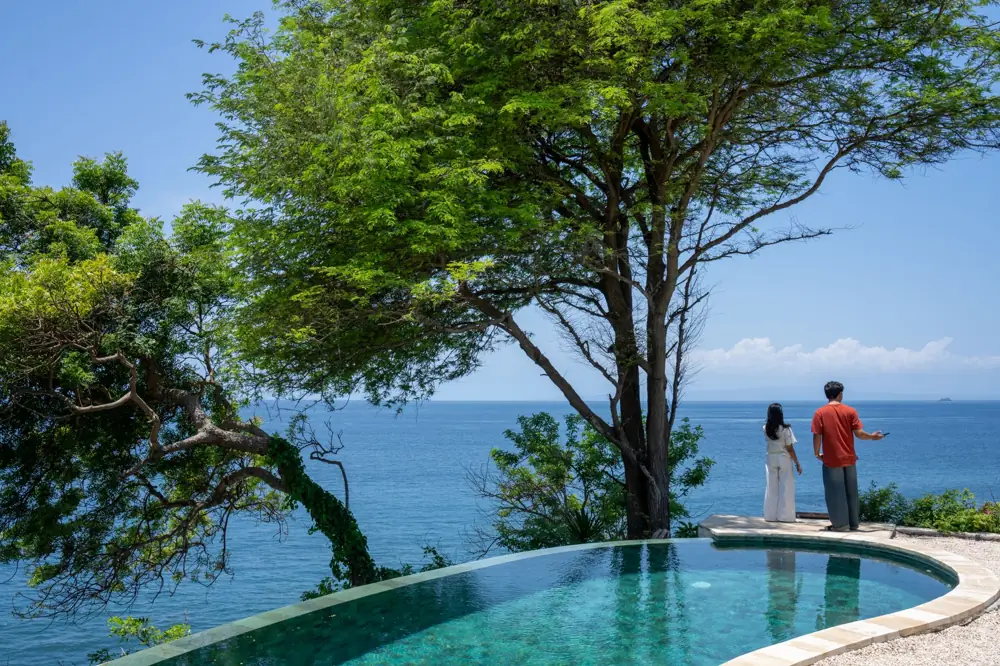
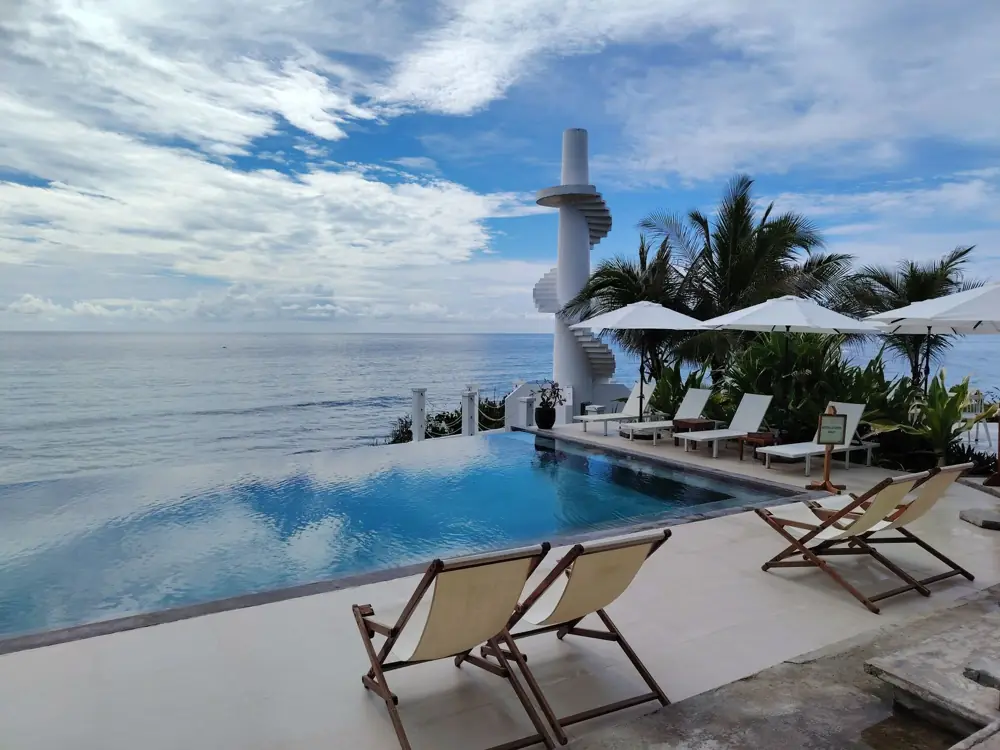
The infinity edge is the pool as postcard: water meeting sky at a vanishing edge, engineered precisely for properties with the views to deserve it. In Hawaii — where every hillside faces ocean and every infinity pool photographs like resort marketing — the design is the premium tier of a premium market, and the engineering behind the magic is real.
This guide prices 2026 infinity edge pools in Hawaii: the catch-basin and circulation engineering that defines the design, the structural premiums over conventional builds, and the site criteria — ocean views, slope, engineering — that separate infinity-edge properties from infinity-edge wishes.
Infinity Edge Pool Cost — At a Glance for US
An infinity edge pool in Hawaii runs $90,000–$180,000 — the vanishing-edge design carries a 40–70% premium over conventional gunite at the same size. The premium buys the catch basin below the weir, the surge-capacity circulation engineering, and the structural work that holds water at a visual knife-edge. The honest prerequisite: a slope with a view — infinity edges on flat lots are water features, not miracles. This figure is a realistic planning number for the United States in 2026, not a marketing low-ball.
| Line Item | Typical Range (USD) | What Drives It |
|---|---|---|
| Conventional gunite pool (comparison base) | $65,000–$100,000 | Same size, no vanishing edge |
| Infinity-edge structural premium | $25,000–$50,000 | Weir wall, catch basin, surge tank |
| Catch basin and circulation upgrade | $8,000–$18,000 | The hidden half of the pool |
| Enhanced waterproofing and finishes | $5,000–$12,000 | Where the edge meets engineering |
| Ocean-front structural engineering | $10,000–$25,000 | Hawaii site realities |
| View-site excavation and access | $5,000–$15,000 | Hillside engineering |
Understanding Infinity Edge Pool Cost
Infinity edges are hydraulic engineering wearing visual minimalism: the weir wall (the vanishing edge itself) is precision-leveled so water sheets over it into a catch basin below, from which a surge-capacity pump system returns the flow. The visual magic is a few millimetres of engineering tolerance; the cost is the entire second water system underneath.
Hawaii is the design’s natural habitat — sloped oceanview lots exist by geology, the resort tradition set the aesthetic bar, and the climate keeps the water warm without heating lines. The honest site criteria: the pool needs a fall away from the weir toward the view, enough slope for the catch basin below, and structural engineering for hillside work. Flat lots with ocean views at distance: the infinity edge still works, technically — it just has nothing to vanish into.
What Moves the Price Up or Down
The premium spread:
| Factor | Cost Impact | Detail |
|---|---|---|
| Weir length (the edge itself) | +8k–15k per 3 m | The visible edge prices linearly |
| Catch basin and surge engineering | +8k–18k | The hidden system |
| Site slope and access (Hawaiian hillsides) | +5k–15k | Excavation on fall |
| Structural/engineering tier | +10k–25k | Oceanfront and hillside realities |
| Finish quality at the edge | +5k–12k | The detail everyone sees |
| Automation and circulation controls | +3k–8k | Precision water management |

Infinity-Edge Builds
Three tiers of vanishing edge:
| Option | Description | Best For | Cost Level |
|---|---|---|---|
| Single-edge infinity (moderate weir) | One vanishing side, standard basin | The honest infinity entry | Mid ($90k–120k) |
| Multi-edge / perimeter overflow | Water vanishing on 2+ sides | Full resort aesthetics | High ($120k–160k) |
| Estate oceanfront build | Engineering at the Hawaiian edge cases | The postcard pools | Premium ($160k–180k+) |
The single-edge build delivers the infinity experience at the honest entry; perimeter overflow is resort money; estate oceanfront is architecture at engineering limits — every tier genuinely needs the view to justify it.
Three Realistic Project Scenarios
Budget — single edge, hillside lot — $95,000–$115,000
12 m weir, ocean view, good access.’, )
- Gunite build + edge structure — $70,000–$85,000
- Catch basin + circulation — $15,000–$20,000
- Engineering and finishing — $10,000–$15,000
Why this matters: the honest infinity entry — one vanishing edge toward the view, engineered properly at hillside scale
Mid — perimeter overflow design — $130,000–$155,000
Two-edge resort aesthetic.’, )
- Multi-edge structure and basin — $95,000–$115,000
- Enhanced circulation and finishes — $20,000–$28,000
- Engineering and detail work — $15,000–$20,000
Why this matters: the resort tier — water vanishing on multiple sides, the pool as architecture rather than feature
Premium — estate oceanfront — $165,000–$180,000
Engineering at Hawaii’s limits.’, )
- Estate build and structure — $120,000–$135,000
- Full systems and premium finish — $25,000–$35,000
- Oceanfront engineering — $15,000–$20,000
Why this matters: the postcard pool — where Hawaiian geology, resort engineering and an actual estate budget meet
The tiers are edge-count and engineering extremity — every one of them is the view’s supporting act, priced accordingly.
Sample Budget Breakdown
The table below shows how a typical mid-range budget for infinity edge pool cost distributes across trades, materials and compliance in the United States. Adjust the percentages to your own scope before using it as a savings target.
| Category | Estimated Amount | Explanation | Optimization Tip |
|---|---|---|---|
| Pool structure and edge | $70,000–$135,000 | The build and its signature | Weir length is the honest visible-price variable — extend it toward the view, not the budget |
| Catch basin and systems | $15,000–$35,000 | The hidden half | Surge capacity and return-flow engineering make the edge work daily — never value-engineer it down |
| Site and engineering | $15,000–$40,000 | Hawaiian reality | Hillside and oceanfront engineering are the premiums the postcard silently contains |
Every figure above is an indicative 2026 market range. Final quotes move with site conditions, contractor availability and the exact specification you lock in.
From Quote to Completion: the Typical Timeline
Most infinity edge pool cost projects follow the same five-stage rhythm. Knowing the calendar before you sign prevents the two classic frustrations — feeling rushed into a deposit, and being surprised by a mid-project gap while materials arrive.
- Week 0: site classification — Soil test, contour survey and service locations come first — excavation pricing cannot be honest without them.
- Week 1–3: design, engineering and permit — Shell engineering, barrier plans and the council/building-permit submission; approvals commonly take 2–6 weeks and gate everything downstream.
- Week 4–6: excavation and shell — Dig, steel, plumbing rough-in and shell pour or craned fiberglass set — the loud week neighbours should be warned about.
- Week 6–10: fit-out — Tiling, coping, equipment set, filtration, electrical certification and barrier install — where most “extras” surface, so keep the variation process in writing.
- Week 10–12: commissioning — Water balance, handover lesson on the equipment, final barrier inspection, and the compliance certificate that legally allows filling.
Smart Ways to Control the Budget
Cost control on infinity edge pool cost is mostly about scope discipline and timing. These are the strategies that consistently deliver the largest savings:
Price the full package, not just the shell
Comparing turnkey quotes — excavation, filtration, fencing, heating and landscaping — prevents the classic 30% budget blow-out on “extras”.
Advantages:
- Directly reduces the controllable parts of the quote
- No impact on structural quality or compliance when scoped correctly
Disadvantages:
- Turnkey quotes are harder to compare line-by-line and can hide margin in bundled items.
- Requires planning lead-time you may not have on urgent repairs
Build in the shoulder season
Pool builders are slammed in spring; autumn builds often come with discounts and more supervisor attention per site.
Advantages:
- Directly reduces the controllable parts of the quote
- No impact on structural quality or compliance when scoped correctly
Disadvantages:
- Cold-weather concrete pours need extra care, and you miss the first summer of swimming.
- Requires planning lead-time you may not have on urgent repairs
Right-size the heating and equipment
Oversized pumps and heaters cost more to buy and run; equipment matched to the actual water volume pays back within a few seasons.
Advantages:
- Directly reduces the controllable parts of the quote
- No impact on structural quality or compliance when scoped correctly
Disadvantages:
- Requires load calculations you may have to commission separately.
- Requires planning lead-time you may not have on urgent repairs
Negotiate the shell, fix the finish
The dig-and-shell price is where builders compete; finishes and waterline tile are where they recover margin — negotiate the package but keep quality in the wet end.
Advantages:
- Directly reduces the controllable parts of the quote
- No impact on structural quality or compliance when scoped correctly
Disadvantages:
- Splitting scope across suppliers can blur warranty responsibility.
- Requires planning lead-time you may not have on urgent repairs
Permits, Rules and Safety
Hawaii pool permits are real — three anchors:
- Pool permits are the norm, not the exception: engineering plans, site setbacks and equipment placement are all reviewed before a digging date is confirmed.
- Fencing/barrier certification is a separate inspection from the build itself — a pool cannot legally be filled in most jurisdictions until the barrier passes.
- Some councils require a stormwater or overflow management plan, particularly on small blocks where the pool displaces absorption area.
Maintenance and Long-Term Ownership Costs
The purchase price is only the first line of the budget. These recurring items are what infinity edge pool cost owners in the United States actually spend money on:
| Task | Frequency | Typical Cost | Why It Matters |
|---|---|---|---|
| Clean filter and skimmer baskets | Weekly | DIY (free) | Starved pumps cavitate and fail early; baskets are the cheapest protection you own. |
| Pump and heater service | Yearly | $150–$250 | Annual service keeps warranties valid and efficiency at nameplate levels. |
| Inspect the barrier and gate latch | Quarterly | DIY (free) | Gate latches are the most commonly failed item in pool safety inspections — a 30-second push-test catches most faults. |
| Drain-and-detail or acid wash | Every 5–7 years | $500–$900 | Removes years of staining and scale build-up without refinishing the shell. |
Infinity pools demand precision maintenance: the weir edge stays clean (a few millimetres of debris break the sheet), catch-basin water levels monitored, circulation balanced for the surge system. It’s professional-attention water — budget service visits honestly, because the visual magic is maintenance-dependent.
Frequently Asked Questions
Does an infinity edge need a view?
Functionally no — the engineering works anywhere. Aesthetically: absolutely, the design exists to erase the boundary between pool and vista. Infinity edges on flat lots are negative-edge water features; the magic requires the horizon.
Why the 40–70% premium over regular pools?
The second water system: catch basin, surge-capacity circulation, and the precision structure of the weir itself. You’re building two pools — the one you see and the one that makes the first one disappear.
Can an infinity edge be added to an existing pool?
Rarely honestly — the weir retrofit is structural surgery on the shell plus the basin system the yard must accommodate. Quote it as rebuild-money; most honest builders will steer toward new-build for the design.
Are they harder to maintain in Hawaii?
Yes, modestly: the edge is a maintenance-demanding precision surface, and salt-air circulation parts want attention. Resort pools have staff for exactly this reason — private owners budget service visits and accept the ritual.
Summary
Planning infinity edge pool cost in the United States starts with an honest range — $90,000–$180,000 for the scenarios most homeowners actually build — then works backwards through weir engineering, the hidden basin system and the view it serves.
Budget $90–120k for the honest single-edge build on a view lot, respect the catch-basin system as the design’s real engine, and build infinity edges only where the horizon earns them — the engineering is the premium, but the view is the point. Collect at least three itemised quotes, confirm the permit path before signing, and hold a 10–15% contingency for site surprises. Those three habits protect more budget than any product choice.