Pool Barrier Compliance and Fence Cost Brisbane
By the Garage Home Editorial Team — reviewed for accuracy. Last updated October 2026. This article is for informational purposes and reflects typical market pricing; obtain local quotes for your specific project.
In Queensland, a pool barrier isn’t a fence — it’s a certificate with an expiry date. Every registered pool in the state carries a compliance status, every property sale and lease tests it, and the owners who discover non-compliance mid-contract are the ones who learn what rectification costs under time pressure.
This guide prices 2026 pool barrier compliance in Brisbane: the inspection-and-certification pathway, the rectification lines that barriers commonly fail on, and the timeline reality of selling or leasing with a pool safety certificate in force.
Pool Barrier Compliance Cost — At a Glance for AU
Pool barrier compliance in Queensland runs A$1,000–A$4,400 in most cases — inspection ($250–$350), minor rectifications (gate hardware, climbable-object removal, $150–800), and re-inspection. Major rectifications (fence height, non-compliant boundary sections, gate replacement) run $1,500–3,500. The certificate lasts 2 years (non-shared pools); sales and leases demand it current. This figure is a realistic planning number for Australia in 2026, not a marketing low-ball.
| Line Item | Typical Range (AUD) | What Drives It |
|---|---|---|
| Pool safety inspection (licensed) | A$310–A$440 | Includes the report and certification path |
| Form 23 / certificate issue (on pass) | A$50–A$100 | The official record |
| Gate hardware rectification | A$190–A$440 | Self-closing hinges, magnetic latches |
| Climbable-object removal within zones | A$0–A$380 | DIY-able — pots, furniture, branches |
| Fence section rectification/replacement | A$1,000–A$3,100 | Failed panels, height, gaps |
| Re-inspection after rectification | A$150–A$250 | The second visit |
Understanding Pool Barrier Compliance Cost
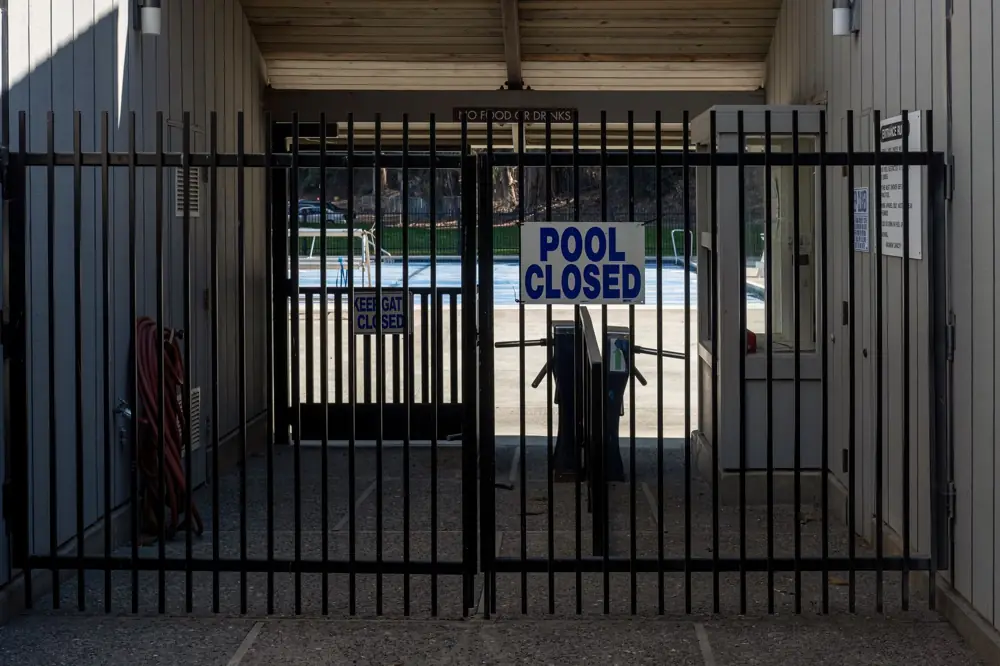
Queensland’s pool safety regime is certificate-based: a licensed inspector examines the barrier against the standard (gate self-closure from any position, latch height, 1200 mm barrier height, non-climbable zones, CPR signage), and issues either a certificate (2-year validity for non-shared pools, 1-year for shared) or a non-conformity notice with 3 months to rectify.
The compliance market is time-sensitive by nature: sales require a current certificate or a Form 36 notice-of-no-certificate (shifting obligation to the buyer), leases demand the certificate outright. The owner who inspects early holds the negotiating position; the owner who waits for contract deadlines pays rectification at urgency pricing and settlement-period stress.
What Moves the Price Up or Down
What moves the total:
| Factor | Cost Impact | Detail |
|---|---|---|
| Pass-first-time vs rectify-then-reinspect | +120–200 re-inspect | Barrier condition decides |
| Gate hardware (the #1 failure point) | 150–350 | Hinges and latches |
| Climbable objects in the zone | 0–300 | Mostly DIY removal |
| Fence-panel or boundary rectification | 800–2500 | Structural failures |
| Shared vs non-shared pool | certificate 1yr vs 2yr | Validity difference |
| Sale/lease deadline pressure | +10–30% | Urgency pricing on rectification |
Compliance Routes
Three honest pathways:
| Option | Description | Best For | Cost Level |
|---|---|---|---|
| Inspect-first, pass clean | Certificate issued same visit | Maintained barriers, disciplined owners | Low ($290–430 total) |
| Inspect, minor rectify, re-inspect | The common Queensland path | Aged hardware, climbable objects | Mid ($550–1,300 total) |
| Rectification project | Structural barrier work | Failed panels, boundary gaps, old fences | High ($1,700–3,800 total) |
The honest strategy: inspect 6 months before any sale or lease plan. The first inspection costs $250–350 and buys the time to fix failures at trades-quotable pace instead of settlement-crisis pace.
Three Realistic Project Scenarios
Budget — clean pass, maintained barrier — A$360–A$540
Well-kept gate, disciplined zone.’, )
- Inspection + certificate — A$360–A$440
- Form 23 issue — A$50–A$100
Why this matters: maintained barriers certify in one visit — the reward for monthly gate-push discipline.
Mid — hardware and zone rectification — A$750–A$1,500
Gate drifts, pot-plant zone.’, )
- Inspection + report — A$350–A$440
- Gate hinge and latch rectification — A$250–A$440
- Zone cleanup + re-inspection — A$150–A$380
Why this matters: the common Queensland path — hardware ages, zones accumulate, and one rectification cycle restores the certificate.
Premium — boundary section rebuild — A$2,250–A$4,400
Old boundary fence fails climbability.
- Inspection and engineering of the fix — A$380–A$500
- Boundary fence section rebuild (15 m) — A$1,750–A$3,500
- Re-inspection and certificate — A$190–A$380
Why this matters: boundary failures are the expensive ones — the pool barrier legally includes what neighbours can climb on their side.
The three routes are barrier condition: maintained certifies cheap, aged hardware certifies with a rectification cycle, structural failures become small projects.
Sample Budget Breakdown
The table below shows how a typical mid-range budget for pool barrier compliance cost distributes across trades, materials and compliance in Australia. Adjust the percentages to your own scope before using it as a savings target.
| Category | Estimated Amount | Explanation | Optimization Tip |
|---|---|---|---|
| Inspection and certification | A$360–A$620 | The legal product | Book 6 months before sale/lease plans — the calendar is the cheapest rectification discount |
| Rectification work | A$190–A$3,500 | By failure type | Gate hardware first — it is the failure that certification actually catches most |
| Re-inspection | A$150–A$250 | The second visit | Bundle all rectifications before booking it — each visit is a fixed cost |
Every figure above is an indicative 2026 market range. Final quotes move with site conditions, contractor availability and the exact specification you lock in.
From Quote to Completion: the Typical Timeline
Most pool barrier compliance cost projects follow the same five-stage rhythm. Knowing the calendar before you sign prevents the two classic frustrations — feeling rushed into a deposit, and being surprised by a mid-project gap while materials arrive.
- Week 10–12: commissioning — Water balance, handover lesson on the equipment, final barrier inspection, and the compliance certificate that legally allows filling.
- Week 0: site classification — Soil test, contour survey and service locations come first — excavation pricing cannot be honest without them.
- Week 1–3: design, engineering and permit — Shell engineering, barrier plans and the council/building-permit submission; approvals commonly take 2–6 weeks and gate everything downstream.
- Week 4–6: excavation and shell — Dig, steel, plumbing rough-in and shell pour or craned fiberglass set — the loud week neighbours should be warned about.
- Week 6–10: fit-out — Tiling, coping, equipment set, filtration, electrical certification and barrier install — where most “extras” surface, so keep the variation process in writing.
Smart Ways to Control the Budget
Cost control on pool barrier compliance cost is mostly about scope discipline and timing. These are the strategies that consistently deliver the largest savings:
Build in the shoulder season
Pool builders are slammed in spring; autumn builds often come with discounts and more supervisor attention per site.
Advantages:
- Directly reduces the controllable parts of the quote
- No impact on structural quality or compliance when scoped correctly
Disadvantages:
- Cold-weather concrete pours need extra care, and you miss the first summer of swimming.
- Requires planning lead-time you may not have on urgent repairs
Right-size the heating and equipment
Oversized pumps and heaters cost more to buy and run; equipment matched to the actual water volume pays back within a few seasons.
Advantages:
- Directly reduces the controllable parts of the quote
- No impact on structural quality or compliance when scoped correctly
Disadvantages:
- Requires load calculations you may have to commission separately.
- Requires planning lead-time you may not have on urgent repairs
Negotiate the shell, fix the finish
The dig-and-shell price is where builders compete; finishes and waterline tile are where they recover margin — negotiate the package but keep quality in the wet end.
Advantages:
- Directly reduces the controllable parts of the quote
- No impact on structural quality or compliance when scoped correctly
Disadvantages:
- Splitting scope across suppliers can blur warranty responsibility.
- Requires planning lead-time you may not have on urgent repairs
Get a soil test before signing
Rock, clay or a high water table can add thousands in excavation and engineering; a geotechnical report costs little relative to that risk.
Advantages:
- Directly reduces the controllable parts of the quote
- No impact on structural quality or compliance when scoped correctly
Disadvantages:
- Adds 1–2 weeks and a few hundred dollars to the front end.
- Requires planning lead-time you may not have on urgent repairs
Permits, Rules and Safety
The compliance system IS the permit regime — three practical anchors:
- Noise controls can apply to pool pumps in residential zones — enclosures or limited run-hours are sometimes conditions of approval.
- Pool permits are the norm, not the exception: engineering plans, site setbacks and equipment placement are all reviewed before a digging date is confirmed.
- Fencing/barrier certification is a separate inspection from the build itself — a pool cannot legally be filled in most jurisdictions until the barrier passes.
Maintenance and Long-Term Ownership Costs
The purchase price is only the first line of the budget. These recurring items are what pool barrier compliance cost owners in Australia actually spend money on:
| Task | Frequency | Typical Cost | Why It Matters |
|---|---|---|---|
| Water balance and sanitiser check | Weekly (self) / monthly (pro) | DIY kits $20; pro service $80–$120/month | Balanced water protects finishes, equipment and swimmers; neglect shows up as etched plaster or corroded heaters. |
| Clean filter and skimmer baskets | Weekly | DIY (free) | Starved pumps cavitate and fail early; baskets are the cheapest protection you own. |
| Pump and heater service | Yearly | $150–$250 | Annual service keeps warranties valid and efficiency at nameplate levels. |
| Inspect the barrier and gate latch | Quarterly | DIY (free) | Gate latches are the most commonly failed item in pool safety inspections — a 30-second push-test catches most faults. |
Certificate maintenance is habit maintenance: push-test the gate monthly (self-close from any position), keep the CPR sign legible, keep climbable objects out of the zone permanently — not just before inspections. Certificates expire at 2 years; calendars renew them.
Frequently Asked Questions
How long does a pool safety certificate last in QLD?
Two years for non-shared pools, one year for shared (apartment complexes, hotels). Renewal is a fresh inspection — the barrier ages on its own schedule regardless of paperwork.
Can I sell without a certificate?
Yes — via Form 36, which transfers the compliance obligation to the buyer before settlement. It weakens your negotiating position on price; certificates are leverage, notices are discounts.
What fails inspections most?
Gates — hinge adjustment and latch operation. Then climbable objects (the BBQ moved near the fence), then boundary-fence climbability. The fence structure itself rarely fails; the habits around it do.
Is the inspector liable if they pass a bad barrier?
Licensed inspectors carry professional liability for the certificate they issue — which is why honest ones are strict. The cheap inspection that passes everything is the expensive one at your next sale.
Summary
Planning pool barrier compliance cost in Australia starts with an honest range — A$1,000–A$4,400 for the scenarios most homeowners actually build — then works backwards through barrier condition and the inspection calendar.
Inspect at $250–350 six months early, fix the gate hardware that fails first, and keep the zone permanently disciplined — compliance in Queensland is a habit with a certificate attached, not a renovation. Collect at least three itemised quotes, confirm the permit path before signing, and hold a 10–15% contingency for site surprises. Those three habits protect more budget than any product choice.