Modular Concrete Fence Wall Cost Per Meter California
By the Garage Home Editorial Team — reviewed for accuracy. Last updated October 2026. This article is for informational purposes and reflects typical market pricing; obtain local quotes for your specific project.
Modular concrete fence walls are precast concrete panels between posts — masonry appearance at fence pricing, installed in days rather than the weeks a block wall demands. In California, where fire codes favor non-combustible boundaries and sound walls line the freeways, precast systems have become the premium-fence answer for estates and HOAs alike.
This guide prices 2026 modular concrete fence walls in California: the precast systems (AFTEC-class) and their stack-panel competitors, the sound-attenuation specs that sell them near highways, and the engineering lines that separate a 6 ft boundary from a 10 ft sound wall.
Modular Concrete Fence Wall — At a Glance for US
Installed modular concrete fencing runs $90–$200 per linear foot — precast panels, steel-reinforced columns, and finish options from smooth to stone-textured. Six-foot privacy boundaries sit at the low end; 8–10 ft sound-attenuation walls with architectural finishes reach the top. Fire-zone properties buy non-combustibility; highway-adjacent buyers buy the STC-rated sound specs. This figure is a realistic planning number for the United States in 2026, not a marketing low-ball.
| Line Item | Typical Range (USD) | What Drives It |
|---|---|---|
| Precast panel system, 6 ft (installed/LF) | $90–$130 | Stack panels, steel posts |
| Precast panels with texture/finish | $110–$150 | Stone, brick, stucco impressions |
| Sound-wall spec 8–10 ft | $150–$200 | STC-rated, engineered |
| Columns and caps | $60–$120 | Per column — structural and decorative |
| Foundations/footings | $30–$60 | Per LF — engineering-driven |
Understanding Modular Concrete Fence Wall
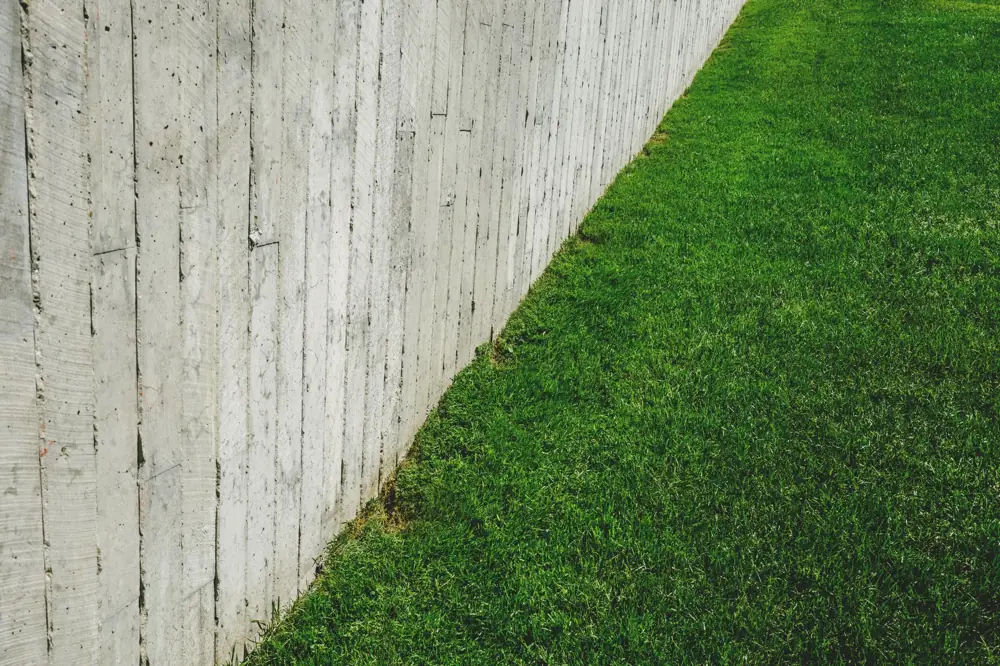
Modular concrete fences are industrial engineering made residential: precast panels lifted or stacked into steel-reinforced columns on engineered footings. The precasting controls quality (factory cure, consistent strength) and the modularity controls installation (days, not masonry weeks). Finishes run from smooth architectural concrete to molded stone and brick textures that pass as masonry at street distance.
California buys these systems for three reasons: fire (non-combustible boundaries matter in WUI zones where wood and vinyl are restricted), sound (the highway-adjacency market — STC-rated precast out-attenuates wood and vinyl by wide margins), and permanence (100-year lifespans, zero maintenance, HOA-friendly aesthetic consistency). The premium over premium wood is real; the lifecycle comparison is not close.
What Moves the Price Up or Down
The per-foot spread:
| Factor | Cost Impact | Detail |
|---|---|---|
| Height 6 ft → 8–10 ft sound wall | +35–60% | Engineering, footings, panel count |
| Finish tier (smooth → texture → architectural) | +15–35% | Molded surfaces and reveals |
| Sound spec (STC rating) | +20–40% | Dense panels, engineered mass |
| Footing/engineering by soil | +10–25% | Clay and seismic zones demand more |
| Site access for crane/panels | +10–15% | Rear yards without access cost more |
| Columns and caps frequency | +15–25% | Spacing and decorative tiers |
Precast Fence Systems
Three tiers with distinct products:
| Option | Description | Best For | Cost Level |
|---|---|---|---|
| Smooth precast 6 ft | Clean architectural concrete | Modern boundaries, budget-precise estates | Low ($90–130/LF) |
| Textured precast (stone/brick face) | Molded masonry appearance | HOA-required aesthetics, traditional architecture | Mid ($110–150/LF) |
| Sound-wall engineering 8–10 ft | STC-rated, seismic-designed | Highway-adjacent, WUI fire zones | High ($150–200/LF) |
The finish tier is aesthetic; the height tier is engineering. Sound and fire applications are what modular concrete genuinely owns — everything else is competing with cheaper systems.
Three Realistic Project Scenarios
Budget — 80 LF smooth 6 ft boundary — $95–$120
Estate side boundary, flat access.’, )
- 80 LF smooth precast installed — $7,600–$9,200
- Columns and caps — $1,600–$2,400
Why this matters: the entry product — concrete permanence at premium-wood pricing, no texture upcharge.
Mid — 120 LF textured, HOA spec — $120–$140
Stone-texture finish required by design review.’, )
- 120 LF textured precast — $14,400–$17,400
- Columns and architectural caps — $3,000–$4,200
Why this matters: HOA design review meets precast texturing — the molded stone faces that pass as masonry at street distance.
Premium — 10 ft highway sound wall — $180–$200
Property backing a freeway.’, )
- STC-rated wall, engineered footings — $21,000–$24,000
Why this matters: the sound wall is the genuine premium product — engineered mass that changes what the backyard sounds like.
The tiers ladder from aesthetic to engineered: boundary, HOA face, sound wall. The last one is the product class modular concrete actually owns.
Sample Budget Breakdown
The table below shows how a typical mid-range budget for modular concrete fence wall distributes across trades, materials and compliance in the United States. Adjust the percentages to your own scope before using it as a savings target.
| Category | Estimated Amount | Explanation | Optimization Tip |
|---|---|---|---|
| Panels and columns | $7,600–$24,000 | LF × tier | Texture at street distance is the honest test — mold quality varies by manufacturer |
| Foundations and engineering | $2,400–$6,000 | Soil and seismic-driven | California seismic zones add real engineering lines — non-negotiable |
| Finish and caps | $1,600–$4,200 | Architectural layer | Columns and caps set the aesthetic — budget them as design, not fence |
Every figure above is an indicative 2026 market range. Final quotes move with site conditions, contractor availability and the exact specification you lock in.
From Quote to Completion: the Typical Timeline
Most modular concrete fence wall projects follow the same five-stage rhythm. Knowing the calendar before you sign prevents the two classic frustrations — feeling rushed into a deposit, and being surprised by a mid-project gap while materials arrive.
- Week 6–12: settlement checks — Posts that were slightly proud settle in the first months; a 90-day defect visit clause in the contract catches gate sag and loose fittings free of charge.
- Day 0–3: site walk and measure — The contractor walks the boundary, checks slope and access, locates services (dial-before-you-dig), and quotes per metre with gates and corners itemised.
- Week 1–2: approvals if needed — Front-boundary or pool fences go to council; boundary fences need the neighbour’s signed agreement under the relevant Fencing Act.
- Week 2–4: materials delivery — Standard palings and panels are stocked; Colorbond, composite and custom slats run 1–3 weeks from the distributor.
- Build: 2–5 days for a typical block — Posts concreted day one and left to cure, then panels, rails, gates and hardware — most residential fences finish inside a working week.
Smart Ways to Control the Budget
Cost control on modular concrete fence wall is mostly about scope discipline and timing. These are the strategies that consistently deliver the largest savings:
Choose standard heights and lengths
Custom heights need taller posts, more concrete and non-stock palings; standard 1.8 m runs are the cheapest per metre.
Advantages:
- Directly reduces the controllable parts of the quote
- No impact on structural quality or compliance when scoped correctly
Disadvantages:
- Limits privacy or compliance flexibility on unusual sites.
- Requires planning lead-time you may not have on urgent repairs
Book in late autumn or winter
Fencing crews are quietest outside the spring renovation rush, and lead times drop from weeks to days.
Advantages:
- Directly reduces the controllable parts of the quote
- No impact on structural quality or compliance when scoped correctly
Disadvantages:
- Wet-ground conditions can slow drilling and add soil-stabilisation costs.
- Requires planning lead-time you may not have on urgent repairs
Keep the gate simple
A single standard pedestrian gate adds far less than double drive gates with automation; every hinge and automation component is a maintenance point.
Advantages:
- Directly reduces the controllable parts of the quote
- No impact on structural quality or compliance when scoped correctly
Disadvantages:
- Reduces convenience for wide access or parking inside the fence line.
- Requires planning lead-time you may not have on urgent repairs
Get quotes priced per metre, not per job
Linear-metre pricing makes quotes directly comparable and reveals who is padding the corner, gate and slope work.
Advantages:
- Directly reduces the controllable parts of the quote
- No impact on structural quality or compliance when scoped correctly
Disadvantages:
- Some contractors refuse to itemise, and per-metre rates rise sharply on sloped blocks.
- Requires planning lead-time you may not have on urgent repairs
Permits, Rules and Safety
California concrete fence permits carry structural specifics:
- Heritage overlays and conservation zones can dictate materials, colours and even the style of palings — always check before ordering materials.
- Front-boundary fences commonly need council approval and height limits differ between states — 1.2 m at the front is a frequent maximum, with 1.8–2.1 m accepted for side and rear boundaries.
- Pool safety fences are separately regulated: in Australia the barrier must be certified by a licensed inspector, and in most US states the barrier code references the national pool safety standard.
Maintenance and Long-Term Ownership Costs
The purchase price is only the first line of the budget. These recurring items are what modular concrete fence wall owners in the United States actually spend money on:
| Task | Frequency | Typical Cost | Why It Matters |
|---|---|---|---|
| Wash and inspect palings/panels | Yearly | DIY (free) | Dirt holds moisture against the surface; a quick wash slows rot and corrosion dramatically. |
| Retighten fittings and check posts for movement | Twice a year | DIY (free) | Gates and corner posts work loose first; early tightening prevents rail sag. |
| Re-oil or reseal timber | Every 2–3 years | DIY $3–$8 per m² | UV breaks down timber coatings; scheduled re-coating roughly doubles paling life. |
| Clear vegetation off the fence line | As needed | DIY (free) | Vines and shrubs trap moisture and push posts out of alignment. |
Precast concrete is a zero-maintenance fence: pressure-wash every few years, re-seal architectural finishes on decade cycles, inspect after seismic events for foundation movement. The 100-year lifespan claim is the manufacturers’ honest one — the product class outlives every alternative.
Frequently Asked Questions
Does modular concrete really look like masonry?
Textured systems at street distance: yes, convincingly. Molded stone and brick faces with colored through-integration pass casual inspection. Close up, the panel repetition reveals the system — texture rotation in installation hides most of it.
Is it worth it over block masonry?
Speed and price: precast installs in days at lower cost than site-built block. Masonry wins on curves and custom geometry; precast wins everything straight-run. Most California boundaries are straight — precast wins most.
How much sound does it actually block?
STC-rated systems at 8–10 ft cut perceived highway noise roughly in half — the difference between unusable and livable backyards. Dense precast mass outperforms every wood or vinyl system by wide margins.
Can it go in fire zones (WUI)?
Yes — non-combustible fencing is increasingly required or favored in California’s wildfire zones, where wood/chain-link boundaries are restricted. Precast concrete is the premium WUI answer.
Summary
Planning modular concrete fence wall in the United States starts with an honest range — $90–$200 for the scenarios most homeowners actually build — then works backwards through height engineering and the sound/fire application.
Smooth panels for permanence at $90–130/LF, textures for HOA faces, sound-wall engineering for the properties that genuinely need it — modular concrete owns the fire-and-sound niches where alternatives aren’t allowed or don’t work. Collect at least three itemised quotes, confirm the permit path before signing, and hold a 10–15% contingency for site surprises. Those three habits protect more budget than any product choice.