Brushwood Fencing Cost Per Meter Sydney
By the Garage Home Editorial Team — reviewed for accuracy. Last updated October 2026. This article is for informational purposes and reflects typical market pricing; obtain local quotes for your specific project.
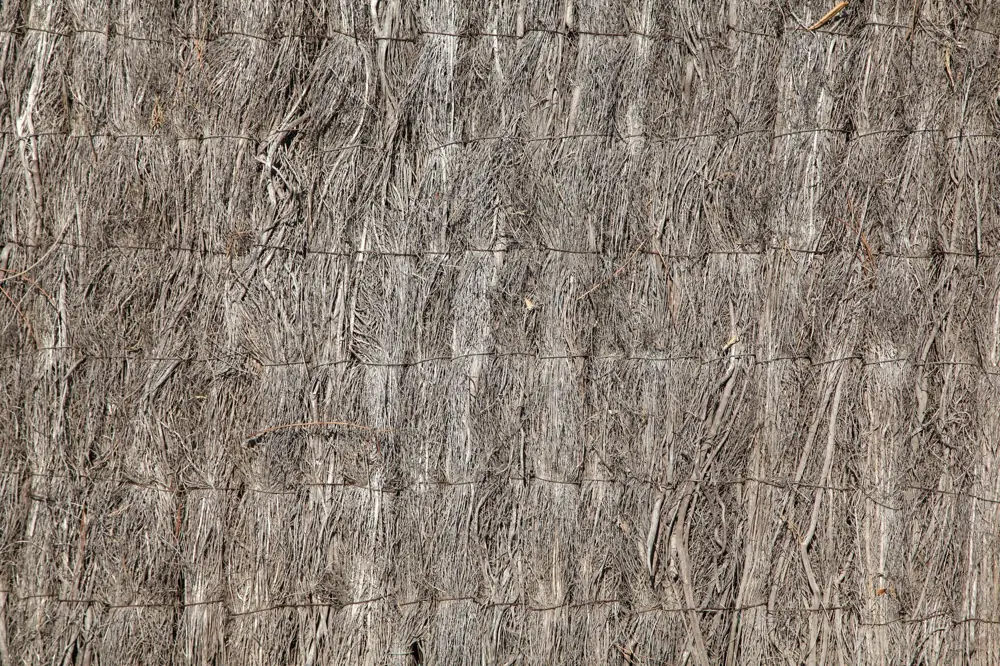
Brushwood fencing is Sydney’s natural screen: hand-packed melaleuca brush in galvanised frames, the texture of the Australian bush compressed into a boundary fence. It is the anti-Colorbond — organic, sound-absorbing, and priced by the square metre like a craft product because it is one.
This guide prices 2026 brushwood fencing per metre with Sydney rates: the roll versus hand-packed build methods that separate the price tiers, the acoustic benefit that road-facing properties buy it for, and the fire-zone reality that limits where it can legally go.
Brushwood Fencing Cost Per Meter — At a Glance for AU
Brushwood fencing in Sydney runs A$220–A$380 per metre installed — roll-panel construction at the accessible end, hand-packed premium work at the top. The density that makes it the best-value acoustic fence in the market is the same labor that sets the price. Fire zones (BAL ratings) restrict or prohibit it; everywhere else it outlasts timber with half the maintenance. This figure is a realistic planning number for Australia in 2026, not a marketing low-ball.
| Line Item | Typical Range (AUD) | What Drives It |
|---|---|---|
| Roll-panel brushwood, installed (per metre) | A$220–A$300 | Prefabricated panels in frames |
| Hand-packed brushwood, installed (per metre) | A$300–A$380 | Denser pack, superior finish and lifespan |
| Galvanised frame and posts | A$50–A$100 | Per metre — the structural skeleton |
| Capping and finish trims | A$19–A$38 | Per metre, treated timber capping |
| Fire-zone assessment (BAL) | A$380–A$750 | If applicable — many areas prohibit brushwood |
Understanding Brushwood Fencing Cost Per Meter
Brushwood fences are melaleuca brush packed between galvanised wire frames — roll panels assembled off-site (faster, cheaper) or hand-packed on site (denser, longer-lasting, pricier). The material’s density does two things structurally: absorbs sound better than any timber at the same price, and weathers to a soft silver-grey without treatments or coatings.
The Sydney market prices brushwood as craft: experienced packers are scarce, and the hand-packed tier commands $60/m premium because the density (and therefore the acoustic performance and lifespan) is visibly different. Roll panels deliver most of the look at lower cost — the honest tier choice is ‘screen’ (roll) versus ‘sound barrier’ (hand-packed).
What Moves the Price Up or Down
What moves the per-metre number:
| Factor | Cost Impact | Detail |
|---|---|---|
| Roll panel vs hand-packed | +25–35% | Density, labor, lifespan |
| Height 1.5 m → 1.8 m | +15–25% | More brush per post |
| Site access (slopes, tight side access) | +10–20% | Hand-packing needs working room |
| Acoustic spec (road-facing) | hand-pack tier | Density is the sound product |
| Fire zone BAL assessment | +300–600, or prohibition | Many BAL zones prohibit brushwood outright |
| Old fence removal | 10 | 20 |

Brushwood Build Tiers
Two build methods, one material:
| Option | Description | Best For | Cost Level |
|---|---|---|---|
| Roll-panel brushwood | Prefabricated panels, fast install | Budget screens, standard boundaries | Low ($180–240/m) |
| Hand-packed brushwood | On-site dense packing, superior acoustic mass | Road-facing, acoustic-priority, premium finish | High ($240–300/m) |
Roll panels answer the boundary-and-privacy brief; hand-packed is what road-facing properties buy when the fence is doing acoustic work. There is no mid-tier — the build method is the tier.
Three Realistic Project Scenarios
Budget — 20 m roll-panel boundary — A$240–A$290
Side boundary, privacy focus.’, )
- 20 m roll-panel installed — A$4,750–A$5,750
- Standard frame and capping — A$620–A$880
Why this matters: roll panels deliver the brushwood look and honest privacy at the market’s accessible end.
Mid — 25 m roll panels with slope — A$280–A$320
Contour site, stepped panels.’, )
- 25 m roll-panel, contoured — A$6,900–A$8,100
- Capping and gate — A$1,000–A$1,500
Why this matters: contours add real labour to brushwood — stepping panels while keeping the pack dense is craft work.
Premium — 30 m hand-packed acoustic barrier — A$320–A$380
Road-facing boundary, sound priority.’, )
- 30 m hand-packed dense — A$9,750–A$11,250
- Acoustic-optimized height and cap — A$750–A$1,100
Why this matters: hand-packed density is the acoustic product — measurable traffic-noise reduction that timber and Colorbond cannot match at this price.
The tiers are density: roll panels screen, hand-pack silences. Choose by what the fence is actually for.
Sample Budget Breakdown
The table below shows how a typical mid-range budget for brushwood fencing cost per meter distributes across trades, materials and compliance in Australia. Adjust the percentages to your own scope before using it as a savings target.
| Category | Estimated Amount | Explanation | Optimization Tip |
|---|---|---|---|
| Panels and packing | A$4,750–A$11,250 | Metre rate by build method | Road-facing: pay the hand-pack premium — the acoustic return is the entire point |
| Frames, posts, capping | A$620–A$2,000 | Structure and finish | Galvanised frames are non-negotiable — timber frames shorten brushwood life by decades |
| Removal and fire assessment (if applicable) | A$380–A$1,500 | Per-site | Check the BAL rating before quoting — brushwood is prohibited in many fire zones |
Every figure above is an indicative 2026 market range. Final quotes move with site conditions, contractor availability and the exact specification you lock in.
From Quote to Completion: the Typical Timeline
Most brushwood fencing cost per meter projects follow the same five-stage rhythm. Knowing the calendar before you sign prevents the two classic frustrations — feeling rushed into a deposit, and being surprised by a mid-project gap while materials arrive.
- Week 1–2: approvals if needed — Front-boundary or pool fences go to council; boundary fences need the neighbour’s signed agreement under the relevant Fencing Act.
- Week 2–4: materials delivery — Standard palings and panels are stocked; Colorbond, composite and custom slats run 1–3 weeks from the distributor.
- Build: 2–5 days for a typical block — Posts concreted day one and left to cure, then panels, rails, gates and hardware — most residential fences finish inside a working week.
- Week 6–12: settlement checks — Posts that were slightly proud settle in the first months; a 90-day defect visit clause in the contract catches gate sag and loose fittings free of charge.
- Day 0–3: site walk and measure — The contractor walks the boundary, checks slope and access, locates services (dial-before-you-dig), and quotes per metre with gates and corners itemised.
Smart Ways to Control the Budget
Cost control on brushwood fencing cost per meter is mostly about scope discipline and timing. These are the strategies that consistently deliver the largest savings:
Get quotes priced per metre, not per job
Linear-metre pricing makes quotes directly comparable and reveals who is padding the corner, gate and slope work.
Advantages:
- Directly reduces the controllable parts of the quote
- No impact on structural quality or compliance when scoped correctly
Disadvantages:
- Some contractors refuse to itemise, and per-metre rates rise sharply on sloped blocks.
- Requires planning lead-time you may not have on urgent repairs
Replace posts and rails at the same time
Old posts under new palings are the most common cause of early failure; renewing the frame while crews are mobilised adds little labour.
Advantages:
- Directly reduces the controllable parts of the quote
- No impact on structural quality or compliance when scoped correctly
Disadvantages:
- Adds 20–30% to a straightforward panel swap.
- Requires planning lead-time you may not have on urgent repairs
Pool neighbours for a boundary fence quote
Shared fencing quoted as one continuous run cuts setup and travel overheads for the contractor — savings often passed on.
Advantages:
- Directly reduces the controllable parts of the quote
- No impact on structural quality or compliance when scoped correctly
Disadvantages:
- Requires agreeing on style and timing with the neighbour, and cost-sharing rules vary by state and council.
- Requires planning lead-time you may not have on urgent repairs
Choose standard heights and lengths
Custom heights need taller posts, more concrete and non-stock palings; standard 1.8 m runs are the cheapest per metre.
Advantages:
- Directly reduces the controllable parts of the quote
- No impact on structural quality or compliance when scoped correctly
Disadvantages:
- Limits privacy or compliance flexibility on unusual sites.
- Requires planning lead-time you may not have on urgent repairs
Permits, Rules and Safety
Brushwood carries fire-zone rules more than boundary rules:
- Pool safety fences are separately regulated: in Australia the barrier must be certified by a licensed inspector, and in most US states the barrier code references the national pool safety standard.
- Fences on shared boundaries are usually cost-shared under state fencing Acts, but a formal notice procedure applies before work starts.
- Retaining walls over about 0.6–1.0 m (varies by council) require engineering and a permit — especially when a fence sits on top of the wall.
Maintenance and Long-Term Ownership Costs
The purchase price is only the first line of the budget. These recurring items are what brushwood fencing cost per meter owners in Australia actually spend money on:
| Task | Frequency | Typical Cost | Why It Matters |
|---|---|---|---|
| Re-oil or reseal timber | Every 2–3 years | DIY $3–$8 per m² | UV breaks down timber coatings; scheduled re-coating roughly doubles paling life. |
| Clear vegetation off the fence line | As needed | DIY (free) | Vines and shrubs trap moisture and push posts out of alignment. |
| Touch up galvanised or Colorbond scratches | As soon as spotted | DIY ($20 kit) | Edge rust spreads under the coating once it takes hold; touch-up paint stops it cold. |
| Wash and inspect palings/panels | Yearly | DIY (free) | Dirt holds moisture against the surface; a quick wash slows rot and corrosion dramatically. |
Brushwood maintenance is nearly nothing: annual inspection for frame corrosion (the galvanised skeleton is the lifespan), occasional re-tensioning of pack wires, and no coatings, stains or treatments ever. The weathered silver-grey is the intended finish.
Frequently Asked Questions
Does brushwood fencing really block noise?
Hand-packed density absorbs meaningfully — the closest thing to an acoustic fence at domestic pricing. Roll panels block some; hand-packed is the acoustic spec. Nothing at similar pricing approaches it.
How long does brushwood last in Sydney?
20–30 years with a galvanised frame; the brush itself is naturally durable. Frame corrosion is the end-of-life mechanism — quality frames are the whole longevity story.
Can I use brushwood in a bushfire zone?
Often no — BAL 12.5+ zones commonly prohibit it, and some councils restrict it regardless. Check the BAL assessment before falling in love with the look.
Is brushwood more expensive than Colorbond?
Yes — roughly 1.5–2× per metre. It competes on texture, acoustic performance and zero-maintenance aging, not price. Boundaries: Colorbond; road-facing and organic-design: brushwood.
Summary
Planning brushwood fencing cost per meter in Australia starts with an honest range — A$220–A$380 for the scenarios most homeowners actually build — then works backwards through build method (density) and the acoustic brief.
Roll panels for the boundary look, hand-packed where the fence is a sound barrier, galvanised frames always — and a BAL check before any brushwood decision in fire-prone Sydney fringes. Collect at least three itemised quotes, confirm the permit path before signing, and hold a 10–15% contingency for site surprises. Those three habits protect more budget than any product choice.