Custom Cedar Garage Door Cost Auckland New Zealand
By the Garage Home Editorial Team — reviewed for accuracy. Last updated October 2026. This article is for informational purposes and reflects typical market pricing; obtain local quotes for your specific project.
Cedar is New Zealand’s premium garage door material — warm-toned, salt-air-tolerant, and the default choice for architectural homes from Waiheke to Wanaka. A custom cedar door is also the most expensive thing that ever happens to a garage opening in this country, which is why the quote structure deserves its own guide.
This 2026 guide breaks down custom cedar door pricing in New Zealand dollars: joinery versus imported-panel routes, why the same 5.0 × 2.1 m double opening quotes from NZ$4,500 to NZ$12,000, and the maintenance schedule that decides whether the door lasts 30 years or 12.
Custom Cedar Garage Door — At a Glance for NZ
A custom cedar sectional door supplied and installed in NZ runs NZ$5,850–NZ$15,600. Slat-style cedar-look builds on steel frames start the range; full joinery-grade tongue-and-groove doors with marine finishing reach the top. Cedar on a steel chassis (the common compromise) sits mid-range and carries the insulation and spring advantages of steel. This figure is a realistic planning number for New Zealand in 2026, not a marketing low-ball.
| Line Item | Typical Range (NZD) | What Drives It |
|---|---|---|
| Cedar slat/panel door on steel chassis, 5.0×2.1 m | NZ$5,850–NZ$9,750 | The architectural standard — insulated, spring-friendly |
| Full joinery tongue-and-groove cedar door | NZ$10,400–NZ$15,600 | Bespoke; site-finished, heritage-grade |
| Marine-grade finish system (3-coat) | NZ$520–NZ$1,150 | Oil or UV-clear systems; the door life insurance |
| Installation, Auckland/Wellington labour | NZ$780–NZ$1,550 | Two-person crew, full day for joinery doors |
| Automation rated for timber mass | NZ$580–NZ$1,150 | Belt/jackshaft units sized for 150–200 kg doors |
Understanding Custom Cedar Garage Door
The NZ cedar door market has two distinct products hiding under one name. The first is a steel sectional chassis wearing cedar slats — insulated, weather-sealed, spring-engineered, and built by the mainstream door industry. The second is true joinery: tongue-and-groove cedar panels, custom-glazed options, site finishing — built by joinery workshops, priced by the project, and subject to timber’s weight and movement.
New Zealand’s coastal and UV environment is genuinely hard on timber doors — the same sun that weathers a deck in 4 years will strip a cedar door’s coating in 5–7. The doors that reach 30 years in Parnell or Takapuna are the ones that were finished properly at install and re-coated on schedule; the doors that grey and cup by year 10 skipped both.
What Moves the Price Up or Down
What separates NZ$4,500 from NZ$12,000:
| Factor | Cost Impact | Detail |
|---|---|---|
| Slat-on-steel vs full joinery | +80–150% | Joinery labour is the premium, not the timber itself |
| Door size single → double | +40–60% | Material and spring rating both scale |
| Glazing (none → cedar-framed windows) | +600–2500 | Joinery-glazed inserts are priced per section |
| Marine finish vs standard stain | +300–600 | Salt zones need 3-coat marine systems |
| Automation for timber mass | +200–450 | Standard domestic openers are rated for lighter steel doors |
Cedar Door Builds Compared
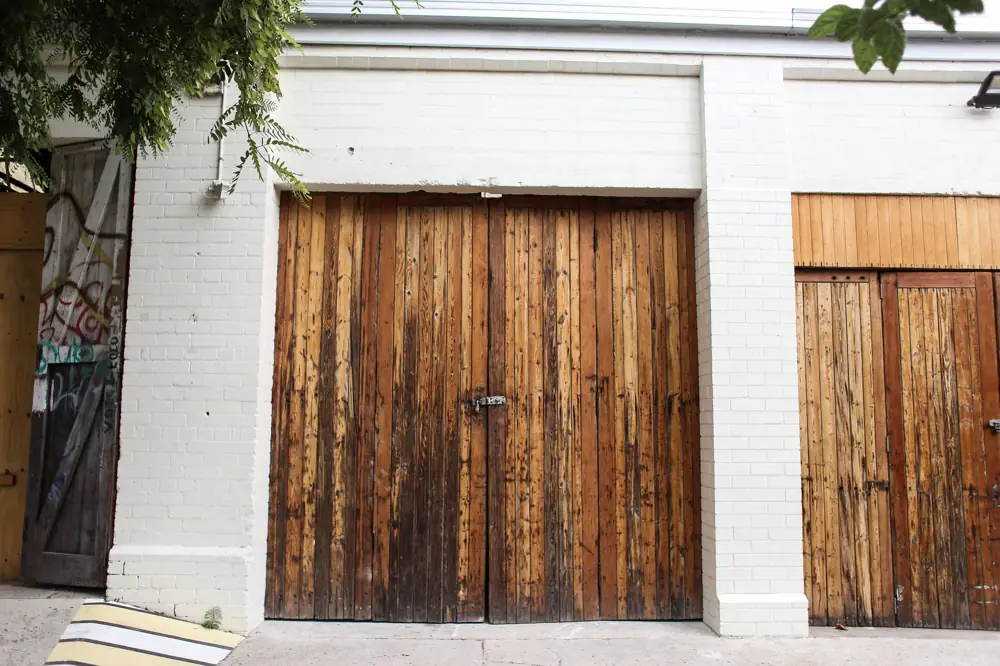
Three routes to a cedar-fronted garage in NZ:
| Option | Description | Best For | Cost Level |
|---|---|---|---|
| Cedar slats on steel chassis | Insulated steel door with cedar slat cladding | Architectural look with mainstream engineering and warranty | Mid (NZ$4,500–7,500) |
| Full joinery tongue-and-groove | Bespoke cedar panels, joinery-made, site finish | Heritage homes, true custom glazing, coastal statements | High (NZ$8,000–12,000) |
| Imported cedar-look sectional | Off-shore manufactured timber-look composite | Budget play — real cedar appearance without joinery cost | Low (NZ$3,000–4,800) |
The slat-on-steel build is where 80% of NZ custom-cedar projects land: joinery-grade street appeal, door-industry engineering, and a finish schedule you can actually maintain.
Three Realistic Project Scenarios
Budget — imported timber-look sectional — NZ$4,150–NZ$6,250
Rental or first home wanting the look without joinery.
- Imported cedar-look door, 5.0 m — NZ$3,650–NZ$4,950
- Install + standard opener — NZ$780–NZ$1,150
Why this matters: appearance at a price that doesn’t fight the mortgage — with the honest trade-off that finish longevity trails real cedar.
Mid — slat-on-steel architectural door — NZ$7,150–NZ$10,400
The standard NZ custom project: cedar slats, insulated steel chassis.
- Cedar slat door on steel chassis — NZ$5,850–NZ$8,050
- Marine 3-coat finish — NZ$650–NZ$1,050
- Heavy-rated automation + install — NZ$910–NZ$1,450
Why this matters: the sweet spot — joinery appearance with spring engineering that will still be balanced in year 15.
Premium — full joinery, glazed — NZ$11,700–NZ$15,600
Villa or architectural new-build; true bespoke cedar.
- Joinery tongue-and-groove door, glazed top sections — NZ$10,150–NZ$12,750
- Site finishing, 3 coats — NZ$780–NZ$1,150
- Jackshaft automation + install — NZ$1,150–NZ$1,700
Why this matters: at this level the door is architecture; budget the re-coat schedule like roof maintenance and it will outlast the mortgage.
The range is a build-quality ladder, not a size ladder — the same 5.0 m opening prices at all three tiers by construction choice alone.
Sample Budget Breakdown
The table below shows how a typical mid-range budget for custom cedar garage door distributes across trades, materials and compliance in New Zealand. Adjust the percentages to your own scope before using it as a savings target.
| Category | Estimated Amount | Explanation | Optimization Tip |
|---|---|---|---|
| Door build (chosen tier) | NZ$5,850–NZ$12,750 | Slat-on-steel through full joinery | Get the joiner and the door company to quote the same spec — the overlap is informative |
| Finish system | NZ$650–NZ$1,150 | Marine-grade 3-coat | Never skip to save NZ$300 — recoating early costs 4× that |
| Automation and install | NZ$910–NZ$1,700 | Heavy-rated opener, full-day crew | Insist on openers rated for the actual door mass |
Every figure above is an indicative 2026 market range. Final quotes move with site conditions, contractor availability and the exact specification you lock in.
From Quote to Completion: the Typical Timeline
Most custom cedar garage door projects follow the same five-stage rhythm. Knowing the calendar before you sign prevents the two classic frustrations — feeling rushed into a deposit, and being surprised by a mid-project gap while materials arrive.
- Day 0–2: site measure — An installer measures the opening, checks headroom and side-room, photographs the existing door and confirms which catalogue models actually fit — quote accuracy lives or dies here.
- Day 3–10: quotes and selection — Two to three itemised quotes arrive; you confirm the model, colour and window spec, and pay any deposit (hold it under 25% where the law allows).
- Week 1–3: door and hardware arrive — Stock steel doors ship in days; custom insulated, wood-look or non-standard colours run 2–3 weeks from the factory.
- Install day: 3–6 hours — Old door off, hardware refreshed, new sections hung, springs matched and calibrated, opener re-tuned, site cleaned and old door hauled away.
- Day of install + 2 weeks: tune-up window — Cables stretch slightly in the first weeks; a reputable installer includes a free adjustment visit in the quote — ask for it in writing.
Smart Ways to Control the Budget
Cost control on custom cedar garage door is mostly about scope discipline and timing. These are the strategies that consistently deliver the largest savings:
Ask about graded or cancelled-order stock
Panels with minor blemishes or cancelled custom orders sell at 20–40% off with the same structural warranty.
Advantages:
- Directly reduces the controllable parts of the quote
- No impact on structural quality or compliance when scoped correctly
Disadvantages:
- Colour and window options are limited to whatever happens to be in the yard.
- Requires planning lead-time you may not have on urgent repairs
Finance through a HELOC or installer plan
Spreading a large conversion over years keeps cash flow free and may be tax-deductible if the space becomes a rental.
Advantages:
- Directly reduces the controllable parts of the quote
- No impact on structural quality or compliance when scoped correctly
Disadvantages:
- Interest adds 5–10% to total cost, and approval depends on credit.
- Requires planning lead-time you may not have on urgent repairs
Collect three itemised quotes
Comparing line-by-line exposes padding in labour or hardware lines; the cheapest total is not always the best value once warranties differ.
Advantages:
- Directly reduces the controllable parts of the quote
- No impact on structural quality or compliance when scoped correctly
Disadvantages:
- Takes 1–2 weeks of waiting, and some installers charge for site measure visits.
- Requires planning lead-time you may not have on urgent repairs
Replace hardware during the door swap
Springs, rollers and cables wear on the same schedule as the door; fitting them while the tradesperson is already on site costs far less than a second call-out.
Advantages:
- Directly reduces the controllable parts of the quote
- No impact on structural quality or compliance when scoped correctly
Disadvantages:
- Raises the upfront ticket by 15–25% even when the old parts still function.
- Requires planning lead-time you may not have on urgent repairs
Permits, Rules and Safety
Door projects themselves are permit-free in NZ, but three clauses bite:
- A door like-for-like swap is usually exempt from planning approval, but converting the garage into living space almost always triggers both a building permit and a change-of-use assessment.
- Structural work — new openings, lintels or a second storey above the garage — needs an engineer’s sign-off and a permit in all five countries covered by this guide.
- Electrical upgrades for openers, outlets or sub-panels must be done or certified by a licensed electrician; the certificate is typically inspected at completion.
Maintenance and Long-Term Ownership Costs
The purchase price is only the first line of the budget. These recurring items are what custom cedar garage door owners in New Zealand actually spend money on:
| Task | Frequency | Typical Cost | Why It Matters |
|---|---|---|---|
| Test the auto-reverse safety sensors | Quarterly | DIY (free) | A door that fails to reverse on a child or pet is a legal and safety liability in all five countries. |
| Professional tune-up | Yearly | $90–$160 | Catches cable fray and spring tension drift before they fail at the worst moment. |
| Rebalance check — door holds half-open | Twice a year | DIY (free) | A door that sags or slides needs spring adjustment; running the opener on an unbalanced door burns out motors. |
| Wash painted/steel finishes and check seals | Yearly | DIY (free–$40) | Salt-air regions corrode steel quickly; seals keep dust and water out of the conversion or workshop. |
Cedar doors live and die by their coating. Re-oil or re-clear every 3–5 years (2–3 in direct west-facing UV), wash salt film off quarterly near the coast, and keep the bottom seal intact — end-grain wicking is what cups panels.
Frequently Asked Questions
How long does a cedar garage door last in NZ?
30+ years with a maintained coating; 10–12 when neglected. The timber itself is durable — it’s the UV-stripped finish that lets moisture in and starts the cupping.
Why is NZ cedar pricing higher than Australian quotes?
Joinery labour rates and smaller-scale manufacturing — Australian cedar door fabricators run bigger batches. Imported options close some of the gap at the cost of finish quality.
Can cedar doors be automated?
Yes, with correctly rated hardware — doors run 150–200 kg versus 60–90 kg for steel. Jackshaft/wall units suit joinery doors best because they mount on the torsion shaft rather than the ceiling.
Is cedar worth it near the coast?
Yes — western red cedar handles salt air better than most timbers when coated; steel doors near the sea fight edge-rust instead. The trade is maintenance attention, not material survival.
Summary
Planning custom cedar garage door in New Zealand starts with an honest range — NZ$5,850–NZ$15,600 for the scenarios most homeowners actually build — then works backwards through build route, finish discipline and automation rating.
Choose slat-on-steel unless the house is genuinely bespoke, fund the marine finish fully, and put the door on the same re-coat calendar as the deck — that’s the whole ownership game. Collect at least three itemised quotes, confirm the permit path before signing, and hold a 10–15% contingency for site surprises. Those three habits protect more budget than any product choice.
Related Garage Doors Guides
- Garage Door Off-Track Repair Cost London UK
- Carriage House Garage Door Installation Cost Chicago
- Chamberlain vs LiftMaster Garage Opener Cost Comparison Ontario
- Insulated Garage Door Cost vs Non-Insulated Florida
- Garage Door Torsion Spring Replacement Cost Sydney Australia
- 16×7 Steel Garage Door Cost Per Panel Texas